South Florida's Evolving Commercial Roof Wind Uplift Standards
For commercial property owners in South Florida, a robust roofing system is not just about keeping water out; it's about standing strong against the region's formidable hurricane seasons. Building codes, especially those pertaining to wind uplift resistance, are regularly refined to reflect new data, construction techniques, and the lessons learned from past storm events. Staying current with these evolving standards is crucial for asset protection and regulatory compliance.
Understanding and meeting current commercial roof wind uplift requirements is a critical investment in your South Florida property's long-term integrity and resilience.
Why Wind Uplift Matters for Your Commercial Roof
Wind uplift is the force exerted by wind that attempts to lift a roof off a building. During a hurricane, this force can be immense, leading to catastrophic roof failure if the system is not adequately designed and installed. The building code specifies minimum wind uplift resistance values, often expressed in pounds per square foot (PSF), that a roofing system must withstand. These values vary significantly based on the building's location, height, and specific roof zones (e.g., perimeter and corner areas experience higher uplift forces).
Failure to meet these standards can result in extensive property damage, business interruption, and significant financial loss. Moreover, non-compliant roofs may face issues with insurance claims and property valuation. Modern building codes, particularly in high-velocity hurricane zones like South Florida, demand increasingly stringent performance from roofing materials and attachment methods.
Key Factors Influencing Wind Uplift Requirements in South Florida
Several factors determine the specific wind uplift requirements for a commercial building in South Florida:
- Building Location: Proximity to the coast and specific wind zone classifications play a major role. Coastal areas typically have higher design wind speeds.
- Building Height: Taller buildings are exposed to higher wind speeds and greater uplift forces.
- Roof Geometry: Flat roofs, sloped roofs, and roofs with parapet walls all have different aerodynamic characteristics that affect wind uplift.
- Exposure Category: This refers to the roughness of the surrounding terrain (e.g., open terrain vs. urban areas).
- Roof Zones: As mentioned, corners and perimeters of a roof experience greater suction pressures than the field of the roof, requiring enhanced attachment in these areas.
The Florida Building Code, particularly the High-Velocity Hurricane Zone (HVHZ) provisions applicable to counties like Miami-Dade and Broward, sets some of the most rigorous standards in the nation. These codes are updated periodically, often incorporating new ASTM and FM Global testing standards for roofing assemblies.
How SPF and Silicone Roof Systems Address Wind Uplift
Spray Polyurethane Foam (SPF) and silicone roof restoration systems offer distinct advantages in meeting and exceeding stringent wind uplift requirements:
Spray Polyurethane Foam (SPF) Roofing
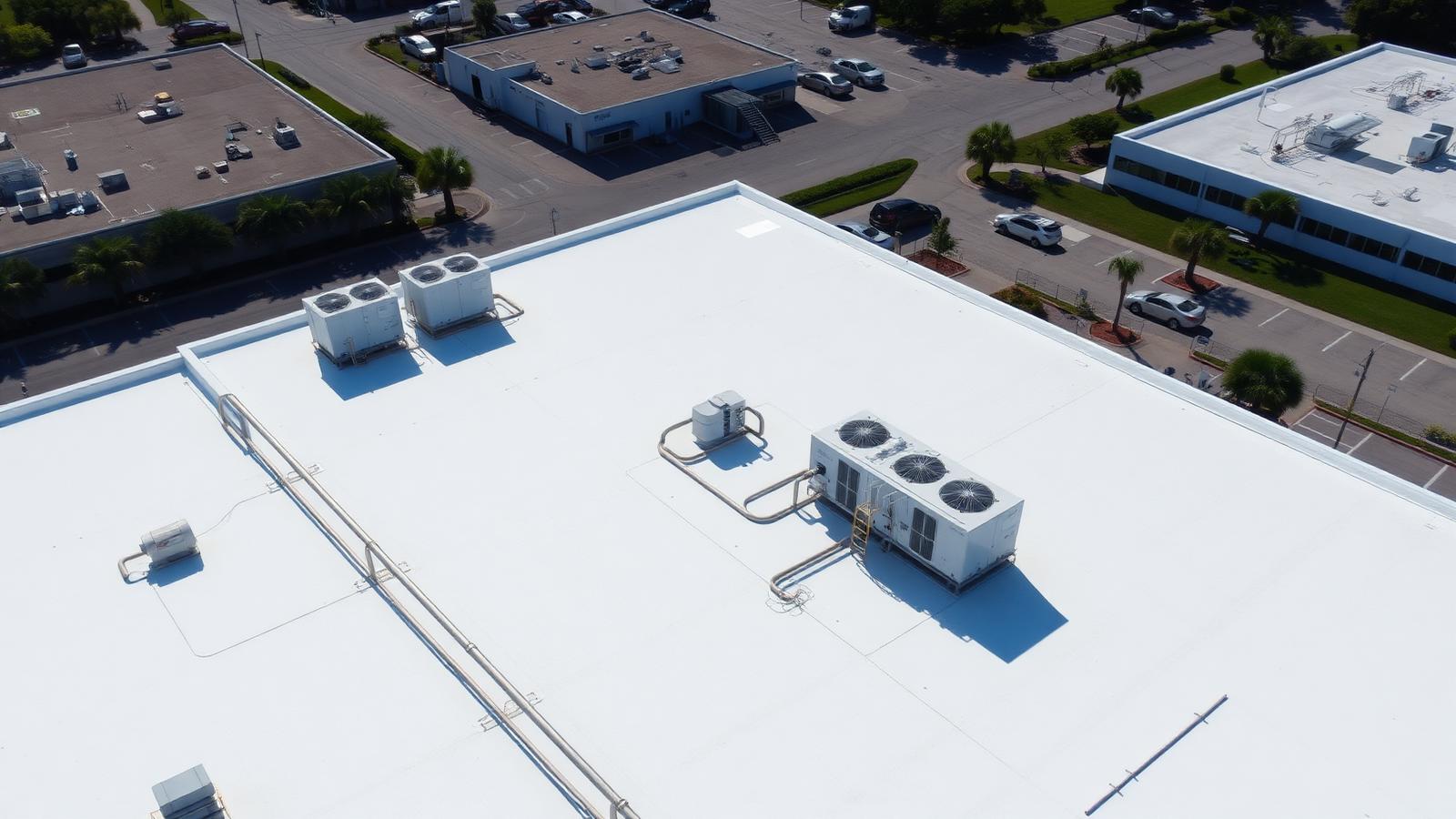
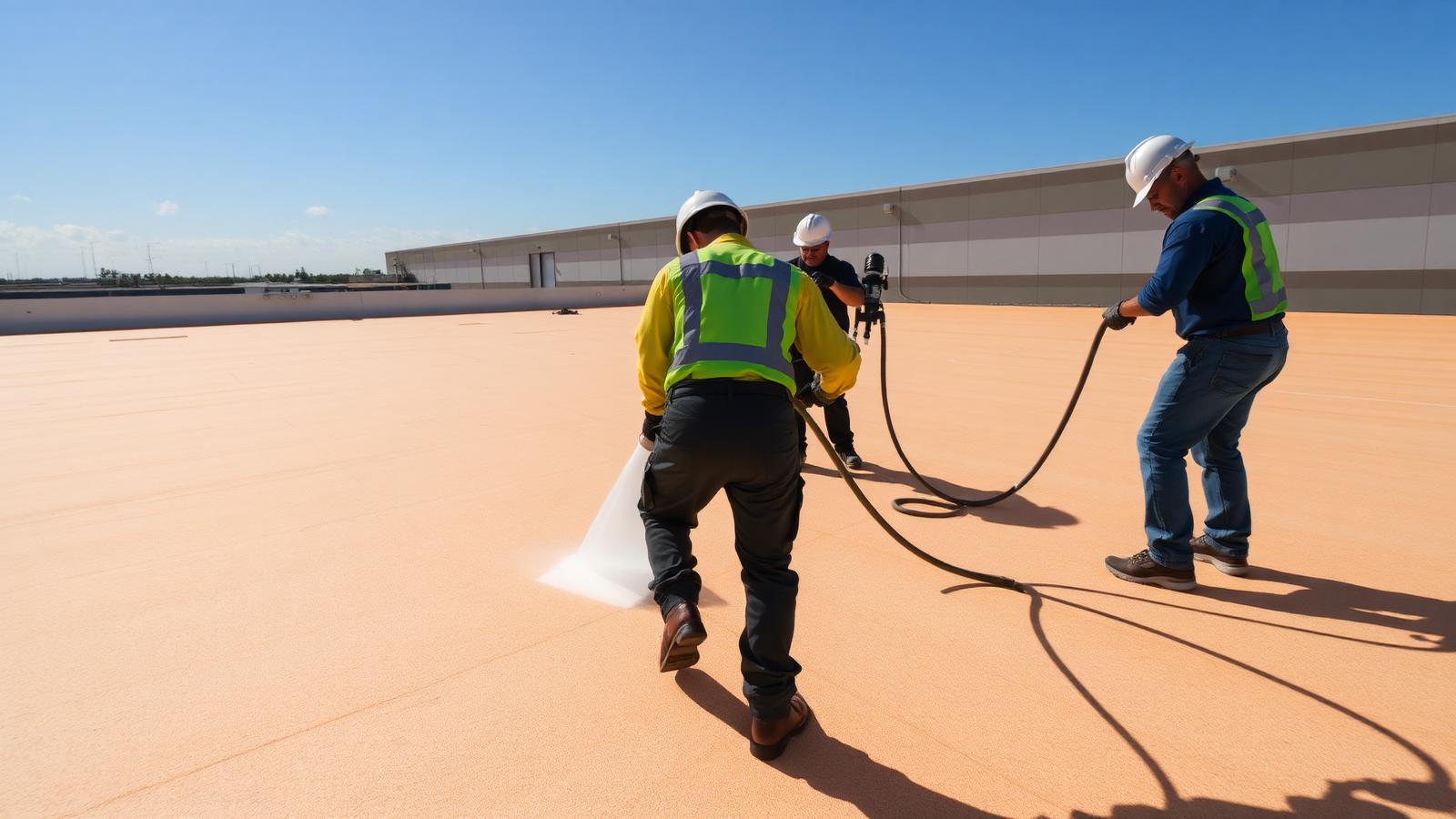
SPF roofing creates a seamless, monolithic layer that adheres directly to the existing substrate. This strong adhesion minimizes potential points of failure that can be exploited by wind. The foam's inherent rigidity and density contribute significantly to its uplift resistance. Furthermore, SPF can effectively fill irregularities and create a smooth, aerodynamic surface, reducing turbulence and localized uplift pressures.
- Full Adhesion: Eliminates mechanical fasteners that can fail under extreme uplift.
- Seamless Monolithic Surface: No seams to peel back or delaminate.
- High Compressive Strength: Resists deformation under pressure.
- Reinforced Perimeters: SPF can be built up in perimeter zones for added strength where uplift forces are highest.
Silicone Roof Restoration Systems
Silicone coatings, when applied over an existing, structurally sound roof, form a durable, seamless membrane. While they rely on the underlying roof's structural integrity, the exceptional adhesion of silicone to various substrates (like modified bitumen, EPDM, TPO, and metal) provides significant uplift resistance. The seamless nature prevents wind from getting underneath the membrane. These systems are often paired with robust fastening patterns for the underlying roof, further enhancing overall wind performance.
- Excellent Adhesion: Bonds tightly to most common commercial roofing substrates.
- Seamless and Flexible: Resists tearing and cracking under wind stress.
- Lightweight: Adds minimal weight to the existing structure while providing enhanced protection.
- Reflective Surface: While not directly related to uplift, the reflective properties of silicone can also contribute to the longevity of the roof system.
The Importance of Professional Assessment and Installation
Navigating the intricacies of South Florida's commercial roof wind uplift requirements demands expertise. A qualified commercial roofing contractor will:
- Conduct a thorough roof assessment: This includes evaluating the existing roof's condition, substrate, and attachment methods.
- Determine applicable code requirements: Based on your building's specifics and location, they will identify the exact wind uplift pressures your roof must withstand.
- Design a compliant system: This involves selecting the appropriate SPF density, silicone coating thickness, and, if necessary, reinforcing existing components.
- Ensure proper installation: Adherence to manufacturer specifications and best practices is paramount for achieving the designed wind uplift resistance.
- Provide documentation: Post-installation reports and warranties confirm compliance and performance.
Attempting to cut corners or using unqualified contractors can lead to a roof that fails to meet code, risking both your investment and your business continuity during a storm.
Staying Ahead of Future Code Changes
The Florida Building Code is a living document, constantly being updated. While specific changes cannot be predicted, the trend towards greater resilience and more stringent wind resistance requirements is clear, especially in coastal regions. Partnering with a roofing contractor who actively participates in industry associations and stays informed about code development ensures your roof system is not just compliant today but is also designed with future resilience in mind.
For commercial property owners and managers in South Florida, understanding and addressing commercial roof wind uplift requirements is non-negotiable. It protects your assets, ensures business continuity, and provides peace of mind during hurricane season. Don't wait for the next storm to test your roof's limits.
Is your commercial roof ready for South Florida's unique challenges? Contact Roof King today for a free, no-obligation roof assessment to ensure your property meets and exceeds current wind uplift requirements.
Free assessment
Free Commercial Roof Assessment
Licensed & insured Florida commercial roofing. Spray foam and silicone restoration across South Florida — no pressure, no cost.