South Florida commercial property owners face a constant battle against the relentless sun and high temperatures. Traditional dark-colored roofs absorb a significant amount of solar radiation, leading to increased indoor temperatures, higher air conditioning costs, and accelerated roof degradation. This is where the material science of reflective roof coatings offers a powerful and practical solution.
Reflective roof coatings leverage advanced material science principles to significantly reduce the amount of solar radiation absorbed by a roof, leading to cooler buildings and substantial energy savings.
Understanding Solar Reflectance and Thermal Emissivity
At the core of reflective roof technology are two key scientific properties: solar reflectance (SR) and thermal emissivity (TE). These properties dictate how a material interacts with solar energy.
-
Solar Reflectance (SR): This measures a material's ability to reflect solar radiation back into the atmosphere, rather than absorbing it. A material with high SR will stay cooler under direct sunlight. SR is expressed as a value from 0 to 1, where 1 indicates perfect reflection and 0 indicates perfect absorption. For example, a white surface typically has a high SR, while a black surface has a low SR.
-
Thermal Emissivity (TE): This measures a material's ability to release absorbed heat. Even highly reflective surfaces will absorb some heat. High thermal emissivity means that any heat that is absorbed can be quickly re-radiated away from the surface. Like SR, TE is expressed as a value from 0 to 1, with 1 indicating perfect emissivity.
Cool roof coatings are engineered to maximize both SR and TE. This dual action is crucial for keeping roof surfaces and the building interiors below them as cool as possible, especially in a climate like South Florida's.
The Role of Pigmentation and Polymer Chemistry
The ability of a coating to reflect sunlight is largely determined by its pigmentation. While white is the most common and effective color for reflective coatings due to its high SR, advancements in material science have led to "cool colored" pigments. These pigments are designed to reflect a high percentage of the near-infrared (NIR) spectrum of sunlight, even when they appear darker to the human eye. This allows for greater aesthetic flexibility without sacrificing significant reflective performance.
Beyond color, the polymer chemistry of the coating itself is critical. High-performance reflective coatings, such as those made from silicone, are formulated with specific polymer chains that provide a durable, flexible, and UV-resistant surface. These polymers are designed to:
- Maintain Reflectivity: Resist chalking, dirt pickup, and degradation from UV radiation, which can diminish reflectivity over time.
- Adhere Strongly: Form a robust bond with the existing roof substrate, ensuring longevity and preventing delamination.
- Resist Ponding Water: Silicone coatings, in particular, are highly resistant to water absorption and ponding, a common issue in flat commercial roofs and a significant challenge in South Florida's rainy season.
How Reflective Coatings Reduce Heat Transfer
When solar radiation strikes a traditional dark roof, much of that energy is absorbed and converted into heat. This heat then conducts through the roof assembly into the building's interior. The result is a warmer indoor environment, forcing HVAC systems to work harder and consume more energy to maintain comfortable temperatures.
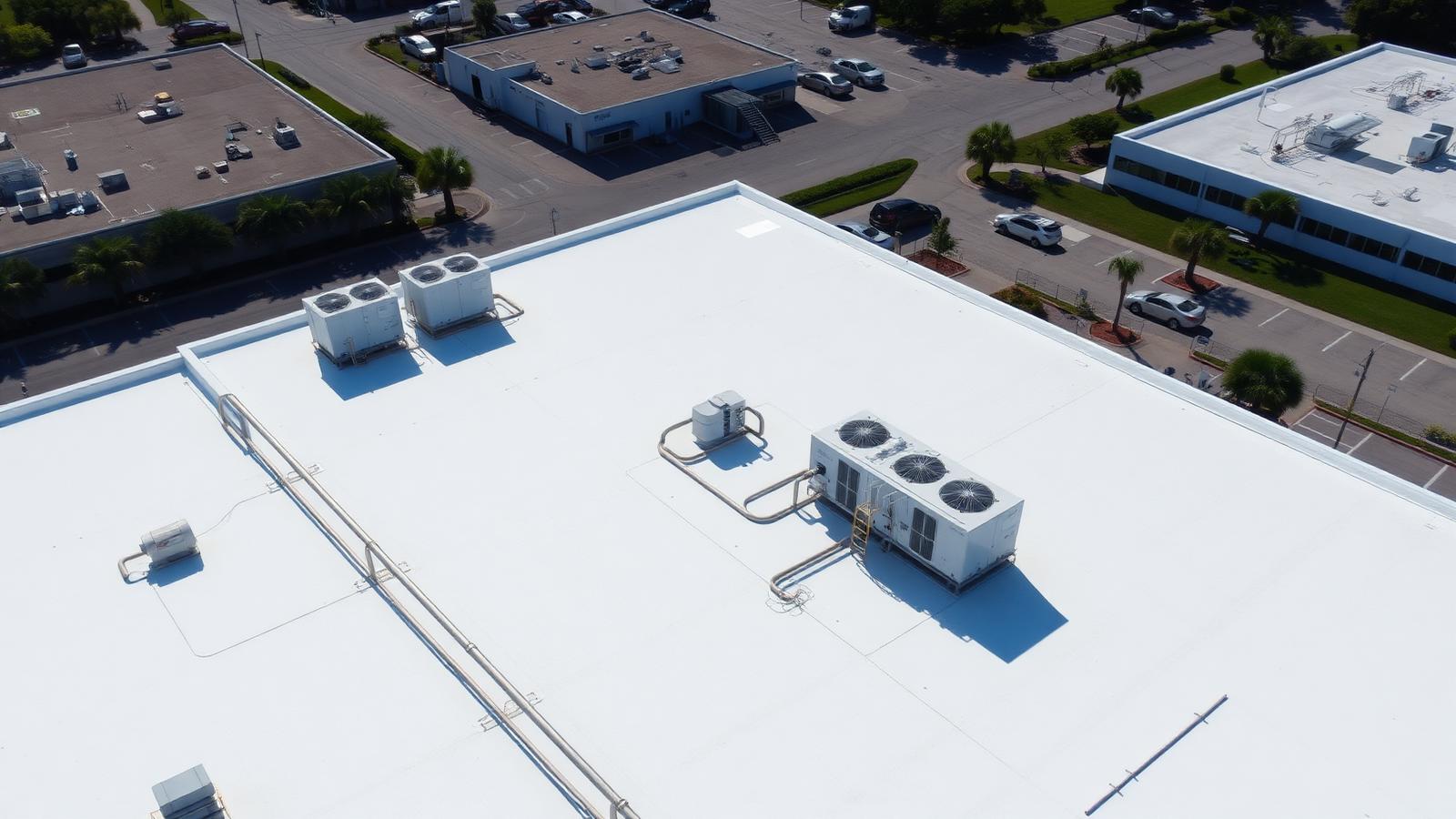
Reflective coatings interrupt this process. By reflecting a high percentage of solar radiation, they prevent much of the heat from ever entering the roof system. The heat that is absorbed is then efficiently re-radiated away due to high thermal emissivity. This significantly lowers the surface temperature of the roof.
- Reduced Thermal Load: A cooler roof surface directly translates to a reduced thermal load on the building. This means less heat is transferred into the building's occupied spaces.
- Decreased HVAC Usage: With less heat entering the building, air conditioning units do not need to run as frequently or as intensely, leading to substantial reductions in electricity consumption and associated costs.
- Extended Roof Life: Extreme temperature fluctuations cause materials to expand and contract, leading to stress, cracking, and premature aging of roofing membranes. By maintaining a more stable and cooler temperature, reflective coatings mitigate these thermal stresses, extending the functional lifespan of the underlying roof system.
The Specific Advantages for South Florida
The climate in South Florida—characterized by intense sun, high humidity, and frequent heavy rainfall—makes reflective roof coatings particularly advantageous.
- Maximum Energy Savings: With high cooling demands for most of the year, the energy savings from a reflective roof in South Florida are among the highest in the nation. Reducing the amount of heat entering a building directly impacts operational costs.
- Hurricane Resistance: While reflective coatings do not directly make a roof hurricane-proof, their ability to extend the life of the underlying membrane by reducing thermal stress contributes to overall roof resilience. A well-maintained and structurally sound roof is better equipped to withstand high winds and heavy rain.
- Ponding Water Resistance: High-performance silicone coatings are uniquely resistant to ponding water, which is a common occurrence on low-slope roofs in Florida after heavy downpours. Unlike other materials, silicone does not degrade or re-emulsify when submerged in water, maintaining its protective and reflective properties.
- UV Degradation Protection: The strong UV radiation in South Florida can quickly break down traditional roofing materials. Reflective coatings, especially those formulated with UV-stable polymers like silicone, act as a sacrificial layer, protecting the underlying roof from this damaging radiation.
Installation and Maintenance Considerations
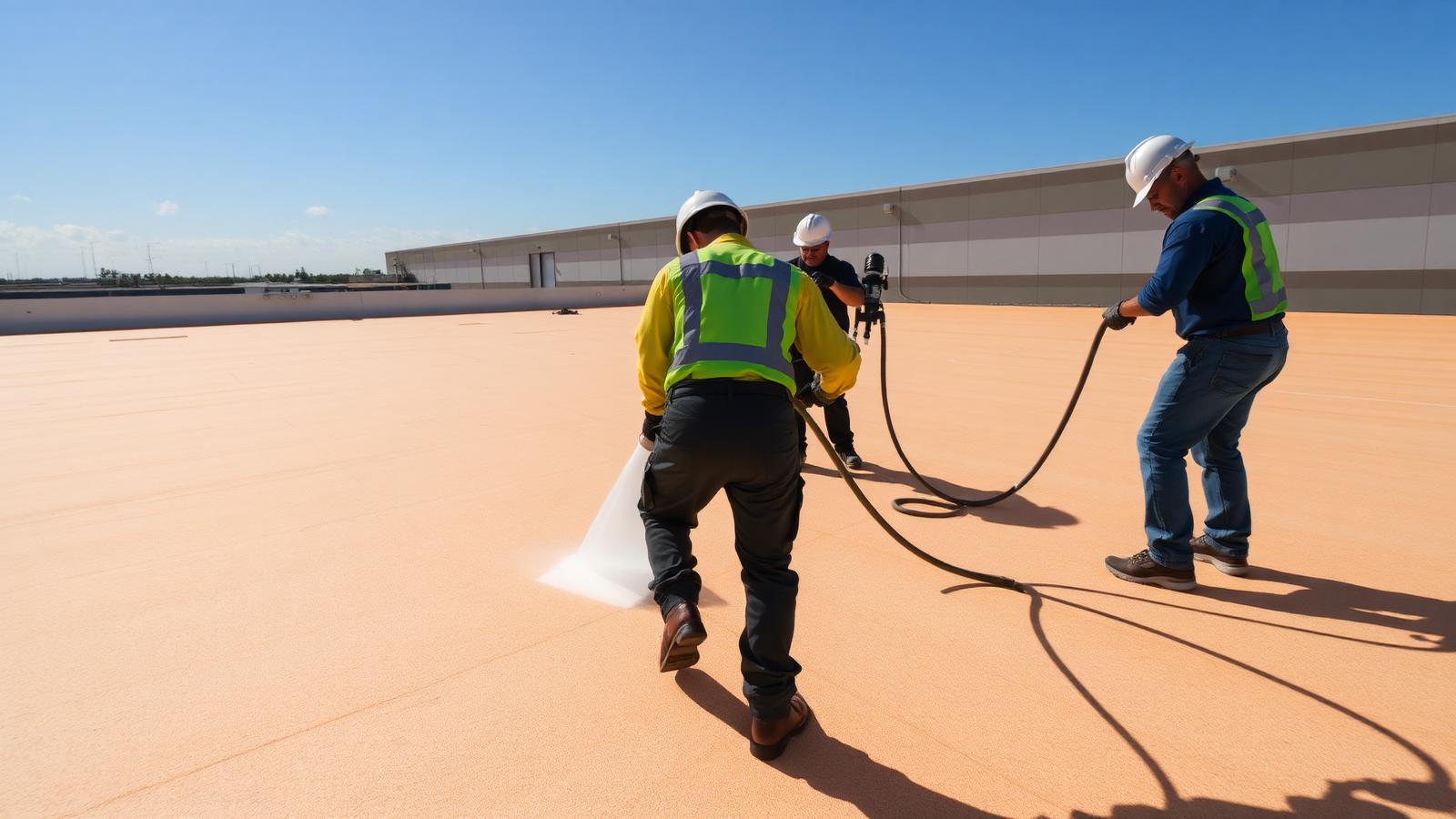
Proper application is paramount to realizing the full benefits of reflective coatings. The roof surface must be meticulously cleaned and prepared to ensure optimal adhesion. Any existing damage or leaks must be repaired before application. The coating is then typically sprayed or rolled on in multiple layers to achieve the desired thickness and uniform coverage.
Once applied, reflective coatings require minimal maintenance. Periodic cleaning to remove dirt, debris, and biological growth can help maintain their solar reflectance over time. The durability and long-term performance of the coating depend heavily on the quality of the product and the expertise of the installation team.
When considering a reflective coating system, look for products that are tested and certified by organizations like the Cool Roof Rating Council (CRRC), which provides independently verified ratings for solar reflectance and thermal emissivity. This ensures that the product meets established performance standards.
Understanding the material science behind reflective roof coatings allows property owners to make informed decisions that benefit their bottom line and contribute to a more sustainable built environment. For commercial properties in South Florida, these coatings are not just an upgrade; they are a strategic investment in energy efficiency, roof longevity, and building performance.
Is your commercial roof ready for a scientific upgrade that can save you money and protect your asset? Contact Roof King today to request a free, no-obligation roof assessment and learn how reflective roof coatings can benefit your South Florida property.
Related reading
Free assessment
Free Commercial Roof Assessment
Licensed & insured Florida commercial roofing. Spray foam and silicone restoration across South Florida — no pressure, no cost.