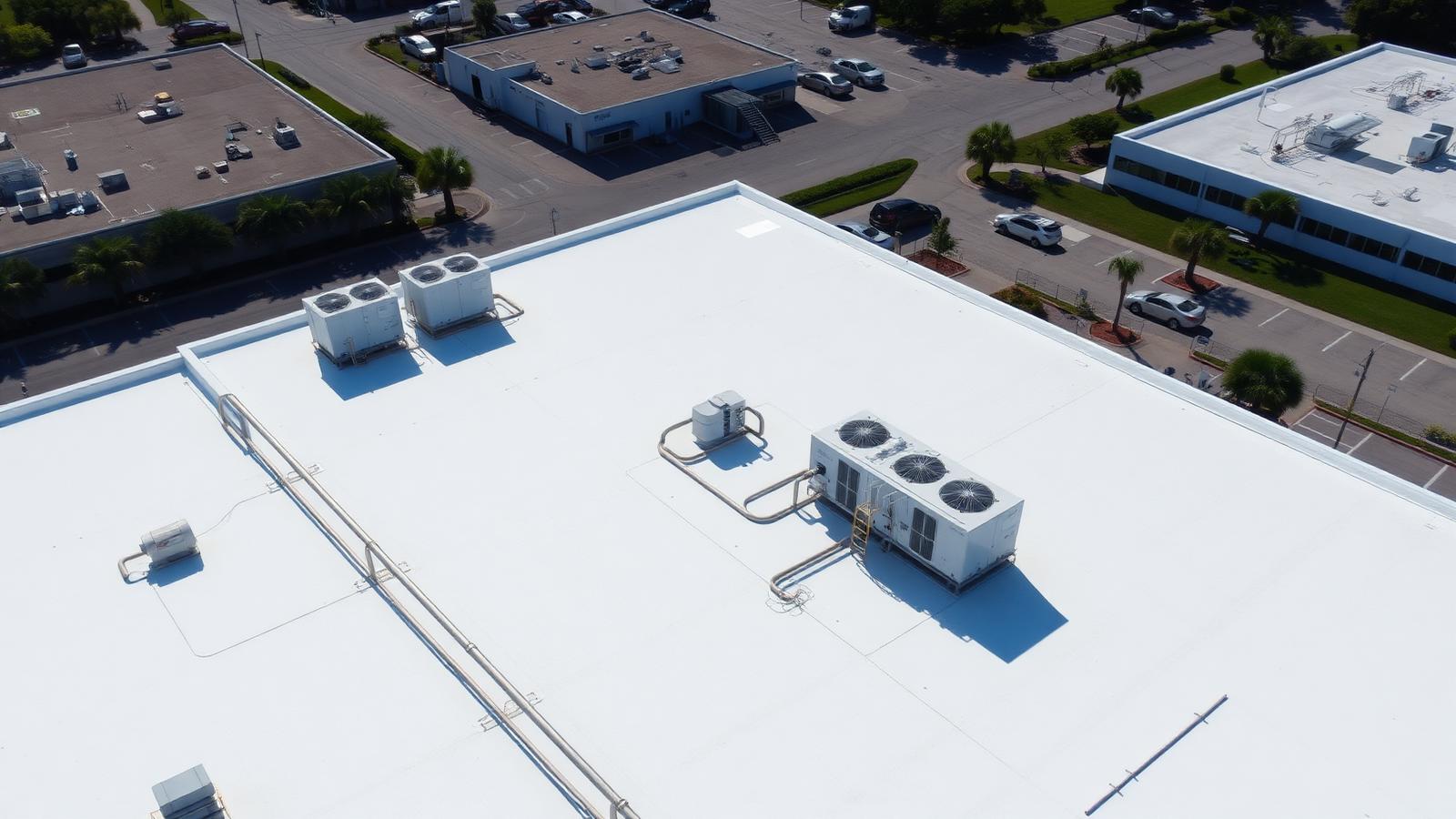
Spray Polyurethane Foam (SPF) roofing provides a robust, energy-efficient, and long-lasting solution for commercial properties, particularly in South Florida's demanding climate, due to its unique material science properties. This advanced roofing system is not merely a coating; it is a fully adhered, monolithic layer that transforms a roof's performance characteristics.**
Understanding Spray Polyurethane Foam: The Core Chemistry
Spray Polyurethane Foam (SPF) is an innovative roofing material formed by mixing two liquid components: an isocyanate (A-side) and a polyol resin blend (B-side). When these components are combined and sprayed onto a substrate, they react rapidly. This reaction causes the mixture to expand and cure, creating a seamless, rigid foam layer. The expansion process is critical, as it allows the foam to fill cracks, crevices, and irregular surfaces, forming a continuous, self-flashing membrane. This chemistry ensures exceptional adhesion to almost any common roofing material, including concrete, metal, and existing modified bitumen systems.
In South Florida, where humidity and heat are constant, the fast-curing nature of SPF is advantageous. It minimizes the time the material is exposed to ambient conditions before it solidifies, reducing the potential for issues caused by moisture or temperature fluctuations during application. The resulting closed-cell structure of the foam is key to its performance, as it traps gas within tiny, isolated pockets, preventing air and water infiltration.
The Insulating Power: R-Value and Thermal Resistance
One of the primary benefits of SPF roofing, especially in a hot climate like South Florida, is its superior thermal insulation. The closed-cell structure of SPF foam gives it an exceptionally high R-value, typically between R-6.0 and R-7.0 per inch of thickness. The R-value is a measure of thermal resistance, indicating a material's ability to resist heat flow. A higher R-value means better insulation.
For commercial buildings in South Florida, where air conditioning systems work overtime, this high R-value translates directly into significant energy savings. The SPF layer minimizes heat transfer from the scorching exterior into the conditioned interior spaces. This reduces the workload on HVAC systems, lowering electricity consumption and operational costs. Unlike traditional insulation methods that can have thermal bridging issues at seams or fasteners, SPF creates a continuous thermal envelope, eliminating gaps where heat can penetrate.
Seamless Waterproofing and Moisture Control
The monolithic nature of an SPF roof system provides unparalleled waterproofing. Because SPF is sprayed on as a liquid and expands to fill all contours, it creates a seamless, fully adhered membrane across the entire roof surface. This eliminates the need for seams, fasteners, or laps, which are common points of failure and water entry in other roofing systems. Traditional roofing materials often rely on overlapping sheets or mechanically fastened panels, each presenting a potential weakness.
In South Florida's climate, characterized by heavy rainfall, tropical storms, and high humidity, this seamless barrier is a critical advantage. Water cannot penetrate through seams that do not exist. Furthermore, the closed-cell structure of SPF itself is inherently resistant to water absorption. Even if the protective topcoat were to be compromised, the foam beneath would still resist water penetration, protecting the underlying structure. This robust water barrier is a cornerstone of SPF's durability and longevity.
Durability and Wind Resistance in Hurricane-Prone Areas
South Florida is no stranger to severe weather, including high winds and tropical cyclones. The material science of SPF makes it exceptionally well-suited to withstand these conditions. Because SPF is fully adhered to the roof substrate, it creates a strong bond that can significantly enhance a building's resistance to wind uplift. There are no loose edges, flapping membranes, or weak points for wind to catch and peel back.
When properly applied and maintained with a protective coating, an SPF roof system forms a rigid, impact-resistant surface. This structural integrity helps the roof resist damage from wind-borne debris, common during storms. The foam's density contributes to its strength, allowing it to absorb and dissipate impact energy more effectively than lighter, less robust materials. This inherent durability means a longer service life and reduced maintenance concerns for commercial property owners in hurricane-prone regions.
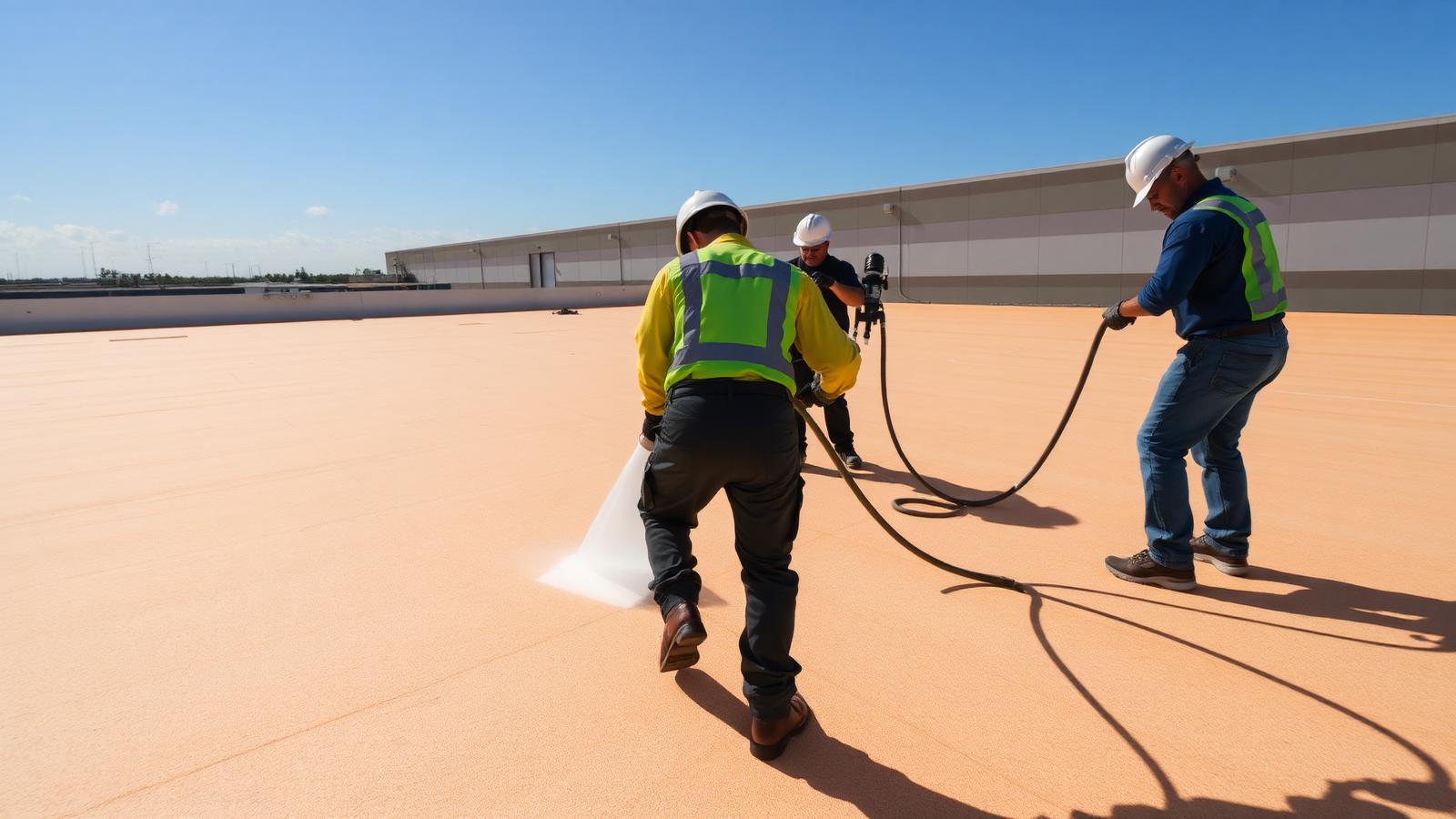
Material Degradation and UV Protection: The Role of Coatings
While SPF foam itself is highly durable, it is susceptible to degradation from ultraviolet (UV) radiation if left exposed. The sun's UV rays can break down the foam's chemical bonds over time, leading to chalking, discoloration, and eventual loss of material. This is why SPF roof systems are always topped with a protective elastomeric coating, typically silicone or acrylic.
These coatings are engineered to be highly reflective and UV-resistant. Silicone coatings, in particular, are favored in South Florida due to their excellent resistance to ponding water, high UV stability, and flexibility in extreme temperature fluctuations. The reflective properties of these coatings also contribute to the roof's energy efficiency by bouncing sunlight away from the building, further reducing heat absorption. The synergy between the insulating SPF foam and the protective, reflective coating is what creates a truly high-performance roofing system.
Longevity and Sustainability Through Restoration
The material science of SPF also supports exceptional longevity and sustainability. An SPF roof system, when properly installed and maintained, can last for decades. Its life cycle can be extended almost indefinitely through recoating. Instead of a costly tear-off and replacement, an aging SPF roof can simply be cleaned and recoated with a new layer of elastomeric coating. This process restores the roof's protective barrier, reflectivity, and waterproofing capabilities at a fraction of the cost and environmental impact of a full roof replacement.
This restorative capability is a significant advantage for commercial property owners in South Florida. It minimizes waste sent to landfills and reduces disruption to business operations. The original SPF foam insulation layer remains intact, continuing to provide its thermal benefits, while the new coating refreshes the roof's exterior performance. This demonstrates the long-term value and sustainable nature of SPF roofing systems.
Understanding the material science behind Spray Polyurethane Foam reveals why it stands out as a premier commercial roofing solution, especially in the demanding environment of South Florida. Its seamless waterproofing, superior insulation, wind resistance, and restorative capabilities translate directly into reduced energy costs, enhanced building protection, and extended roof life for your property.
Is your commercial roof ready for a durable, energy-efficient upgrade? Contact Roof King today for a free, no-obligation roof assessment and discover how SPF roofing can benefit your South Florida property.
Related reading
Free assessment
Free Commercial Roof Assessment
Licensed & insured Florida commercial roofing. Spray foam and silicone restoration across South Florida — no pressure, no cost.