The Roof File: The One Folder That Saves South Florida Property Managers Money Four Times a Year
Sometime in the next twelve months, four different people are going to ask you for paperwork about your roof. Your insurance underwriter at renewal. An engineer doing a milestone inspection. A warranty administrator deciding whether to honor a claim. And maybe a buyer's due-diligence team running a property condition assessment. The property managers who can hand over a complete roof file in an afternoon get better premiums, faster inspections, honored warranties, and cleaner closings. The ones who can't pay for the same roof twice — once in real life, and once on paper.
After 30+ years and 10 million-plus square feet of commercial roofing across Broward, Miami-Dade, and Palm Beach, we've noticed something: the buildings that cost the least to own aren't the ones with the newest roofs. They're the ones with the best records. Here's how to build that file — and how to rebuild it when you inherit a building that has nothing.
Why the Roof File Matters More in 2026 Than It Ever Has
Roof documentation used to be a nice-to-have. Three forces have turned it into an operating requirement in South Florida.
Insurance underwriting now runs on roof paperwork. Florida's residential market shows where everything is heading: insurers can't refuse coverage on roofs under 15 years old based on age alone, but past that mark, carriers demand inspections or a roof condition certification attesting to remaining useful life. Commercial underwriters run on the same logic. At renewal, expect questions about roof age, system type, attachment method, and last inspection date — and expect the answers to move your premium. A roof with a documented restoration and a current condition report is underwritten very differently than a roof listed as "age unknown."
Milestone inspections put your roof in front of an engineer. Under Florida's SB 4-D framework (refined by later legislation, including 2025's HB 913), condominium and cooperative buildings three stories or taller need a milestone structural inspection at 25 years from their certificate of occupancy if within three miles of the coast, 30 years inland, and every 10 years after that. The Phase 1 visual inspection explicitly covers the roof, alongside the facade, foundation, balconies, and load-bearing walls. Non-compliance carries real teeth — fines that can reach $10,000 or more per month per violation, plus potential personal liability for board directors. An engineer who opens a complete roof file starts from evidence. An engineer who opens an empty one starts from suspicion — and suspicion is what triggers Phase 2 destructive testing.
Warranties are only as good as your maintenance log. Nearly every commercial roof warranty — manufacturer or contractor — conditions coverage on documented periodic inspections and prompt, recorded repairs. When a claim gets denied, the reason is rarely the leak itself. It's the missing paper trail.
A roof without records gets priced like a roof at the end of its life — no matter how much life it actually has left.
The Nine Documents Every Building's Roof File Should Contain
If you manage a portfolio, build one of these per building. Digital, shared, and backed up.
- Roof plan and assembly spec. What's actually up there — deck type, insulation, membrane or foam thickness, coating system — and a plan showing drains, penetrations, and HVAC curbs.
- Installation records. The original contract, permit, and final inspection for the current roof system. This is what establishes roof age, the single number underwriters ask about first.
- Warranty documents. Both the manufacturer's material warranty and the contractor's workmanship warranty — plus the transfer terms, which matter the day the building sells.
- Inspection reports. Semiannual condition reports, and a dated report after every named storm. In South Florida, post-storm documentation is also your insurance claim's foundation.
- Repair log. Every repair, with date, location, cause, photos, and invoice. This is the document that keeps warranties alive.
- Moisture survey results. Infrared or capacitance scans with core samples. This is where the Moisture Rule lives: below 15% saturated area, a roof is a restoration candidate; above 50%, it needs replacement. The number in this report is worth hundreds of thousands of dollars in either direction.
- Engineer letters and certifications. Roof condition certifications for insurance, engineer letters for permitting or lender requirements, wind-uplift documentation.
- Product approvals. The Miami-Dade NOA or Florida Product Approval numbers for the installed system — the first thing a building department or milestone engineer checks.
- Maintenance program records. Proof of a standing maintenance plan, with visit dates and findings.
Inheriting a Building With No Roof Records? Here's the Rebuild Sequence
Every property manager eventually takes over a building where the roof file is a shrug. Rebuild it in this order:
Start with the permit history. Broward, Miami-Dade, and Palm Beach counties — and most of their cities — have searchable online permit portals. A past reroof or coating permit gives you roof age, contractor, and sometimes the approved system spec in one search.
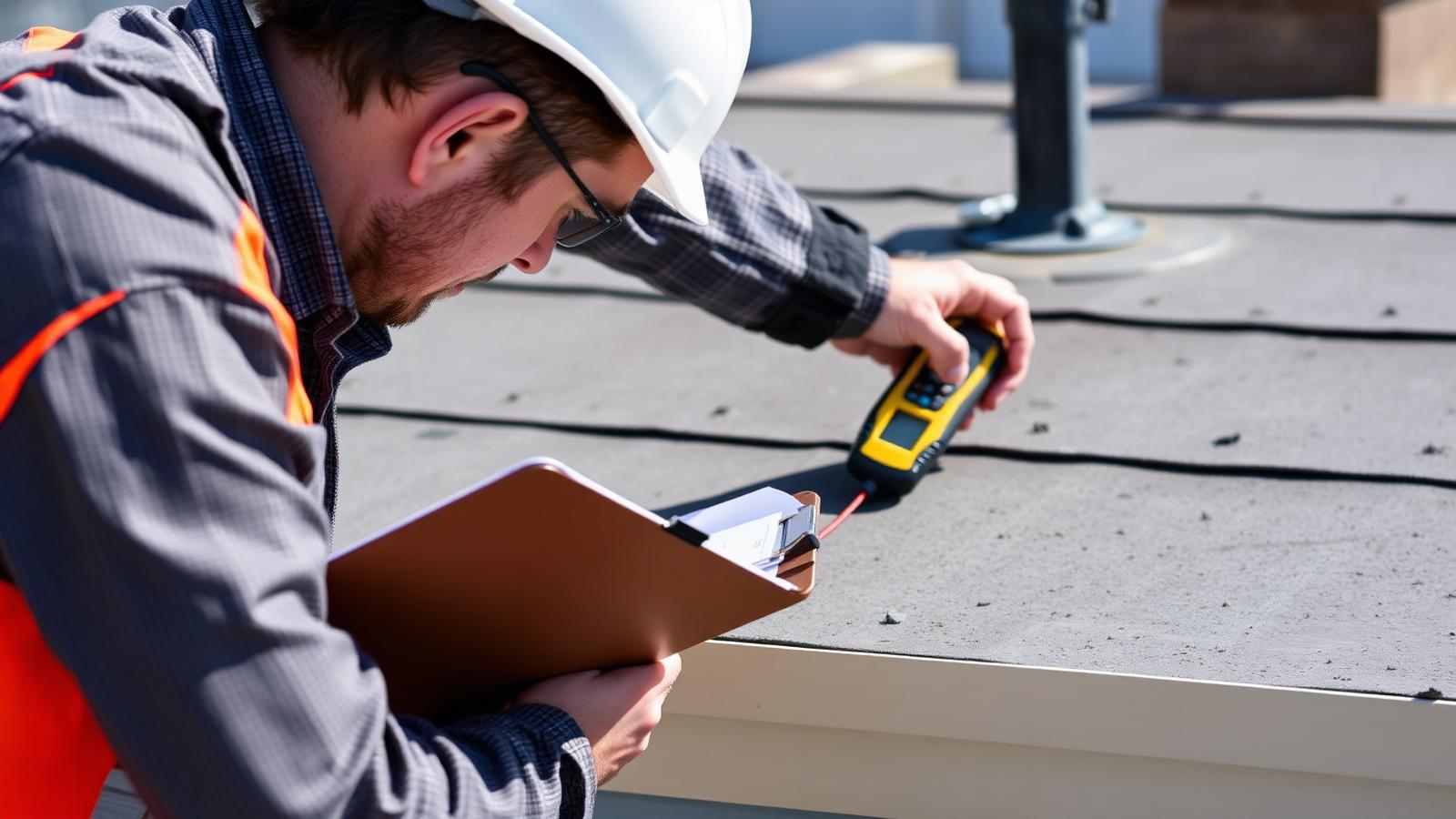
Get a professional condition assessment. A proper commercial roof inspection documents the system type, seams, flashings, drainage, and ponding areas with photos. This becomes page one of the new file. (Ours are free — more on that below.)
Commission a moisture survey before making any capital decision. You can't see saturated insulation from the surface. The scan tells you whether you're managing a restoration candidate or budgeting for a tear-off — and it's the document that lets you defend either number to an owner or a board.
Get the certification you'll be asked for anyway. If the roof is sound, a written condition report or engineer letter stating remaining useful life turns your next renewal from an interrogation into a formality.
If you want a fast first read before committing to site visits, our Instant Roof Analyzer gives you a preliminary assessment of any roof in your portfolio from your desk.
Restoration Doesn't Just Renew the Roof — It Renews the Paper Trail
Here's the part of the restore-versus-replace math that rarely gets discussed. A silicone-coated or spray-foam-restored roof doesn't just cost about a third of a tear-off replacement — it resets the documentation clock. You get a new installation record, a new warranty with a fresh start date, new product approval numbers, and a current condition report, all without disrupting a single tenant. For underwriting and inspection purposes, a documented restoration transforms a 20-year-old question mark into a known, warrantied system.
And maintenance programs keep the file writing itself. Our Crown Care program exists for exactly this reason: every scheduled visit produces a dated report with photos and a repair log entry. Our clients don't scramble when the underwriter or the milestone engineer calls — the file is already current. That's the kind of consistency you get from a crew that's worked together for 20+ years across 7 fully-rigged spray trucks.
FAQ
Do Florida milestone inspections include the roof? Yes. The Phase 1 visual inspection performed by a licensed engineer or architect covers the roof along with the facade, foundation, balconies, railings, and load-bearing walls. Buildings three stories or taller hit the requirement at 25 years from certificate of occupancy within three miles of the coast, 30 years inland, then every 10 years.
What is a roof condition certification, and will my insurer accept it? It's a written statement from a licensed roofing contractor or engineer documenting the roof's condition and estimated remaining useful life — commonly three to five years minimum. Acceptance varies by carrier, but on older roofs it's frequently the difference between renewal and non-renewal, so ask your agent exactly what format their underwriter wants.
How often should a commercial roof in South Florida be inspected? Twice a year — ideally before and after hurricane season — plus a documented inspection after any named storm that passes over your area. Each report goes in the file; together they form the maintenance history your warranty and your insurance claims depend on.
Get Page One of Your Roof File — Free
If any building in your portfolio has a thin roof file, start fixing it this week. ROOF KING has restored commercial roofs across South Florida for 30+ years — 10 million-plus square feet, 25 people on payroll, and the same core crew for over two decades. We'll inspect your roof, document its actual condition, and tell you honestly whether it's a restoration candidate or not. Schedule your free roof assessment today at 954-782-3002. Strength from above.
Sources
Related reading
Free assessment
Free Commercial Roof Assessment
Licensed & insured Florida commercial roofing. Spray foam and silicone restoration across South Florida — no pressure, no cost.