Three Bids, Three Different Roofs: How to Compare Commercial Roofing Proposals Apples to Apples
You asked three contractors to quote the same 40,000-square-foot flat roof in Broward County. The numbers came back at $180,000, $265,000, and $410,000. Your board wants to know why the spread is 128%. Here's the uncomfortable answer: those three companies did not bid the same job. One priced a coating over whatever's up there. One priced a partial tear-off it never explained. One priced a full replacement your roof may not need. Until you force every bidder onto the same scope, you're not comparing prices — you're comparing guesses.
After 30-plus years and more than 10 million square feet of commercial roofing across South Florida, we've been on every side of this process, including as the subcontractor other roofers bring in for spray foam and coatings. This is the checklist we'd hand any property manager or condo board before they open a single envelope.
Why the numbers never match: it's scope, not price
Commercial roofing proposals diverge for a handful of predictable reasons, and almost none of them are "one guy is ripping you off."
The biggest variable is what happens to the wet material in your roof. Water-damaged insulation has to come out before anyone coats or recovers a roof, and industry cost guides put silicone restoration systems at roughly $3.50–$7.00 per square foot as of mid-2026 — with wet-insulation removal being one of the main reasons a project lands at the top of that range instead of the bottom. A bidder who assumes your roof is dry will always be cheaper on paper than the one who scanned it and priced reality.
The second variable is thickness. Coating warranties are tied to dry film thickness — commonly around 20 dry mils for a 10-year warranty, 25 for 15 years, and 30 for 20 years. A "silicone roof" quoted at 15 mils and a "silicone roof" quoted at 30 mils are different products at different prices, even though both proposals say "silicone roof."
The third is everything around the field of the roof: edge metal, penetrations, drains, pitch pans, walls. Detail work is where flat roofs actually leak, and it's the first thing a low bidder quietly thins out.
A bid without a moisture survey attached isn't a price. It's a guess with a signature line.
Five line items to force into every bid
Send every bidder the same one-page scope addendum and require these five items broken out. Any contractor who won't itemize them is telling you something.
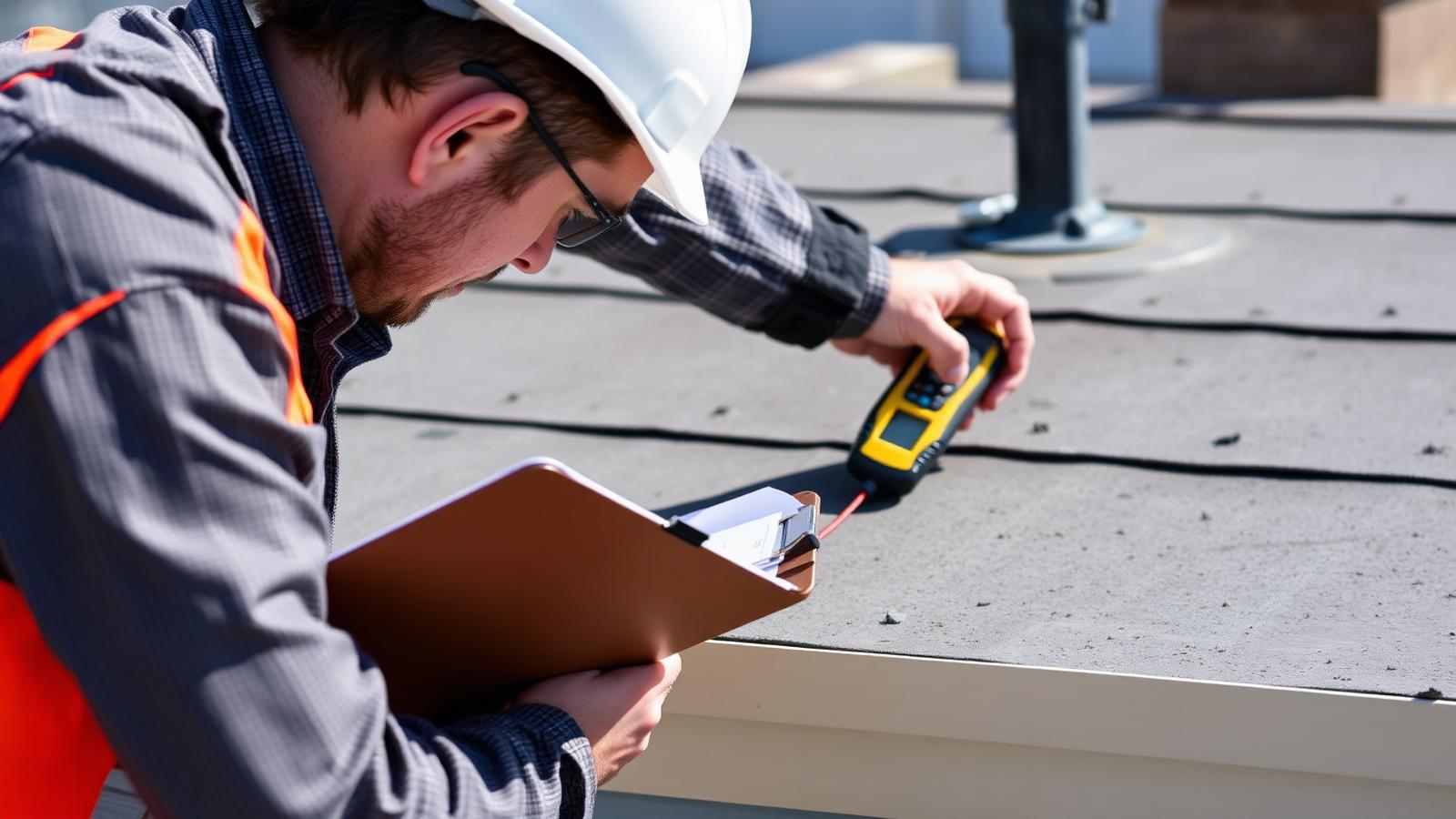
1. The moisture survey, and the method. Infrared, capacitance scan, or core samples — you want to know how they determined what's wet, and you want the map. This matters doubly because it drives the restore-or-replace decision itself (more on that below).
2. A unit price for wet insulation removal and replacement. Not an allowance buried in the total — a per-square-foot price and a stated assumed quantity. This is the single biggest source of change orders on restoration work. If the scan says 800 square feet is wet and the bid assumed zero, you'll meet that money later, at a worse price.
3. Dry mil thickness and the warranty it buys. Ask for the specified dry film thickness, the manufacturer, and whether the warranty is a manufacturer's system warranty or just the contractor's workmanship letter. Have them state what voids it.
4. Details, itemized. Edge metal, penetrations, drains, and walls should appear as scope lines, not be presumed inside "roof coating."
5. Permit, product approvals, and inspections. In South Florida this is not boilerplate — see the next section.
The South Florida compliance check most boards skip
Broward and Miami-Dade counties sit in Florida's High Velocity Hurricane Zone (HVHZ), the strictest roofing jurisdiction in the country. Two practical consequences for your bid review:
Product approvals are specific, not generic. In the HVHZ, roofing products carry a Miami-Dade Notice of Acceptance (NOA) — and an NOA approves a specific product for a specific application under specific conditions, with an expiration date. Ask each bidder to list the NOA or Florida Product Approval numbers for the actual system they're quoting on your building. A contractor working in Pompano Beach, Fort Lauderdale, or Miami should produce these without hesitation; permit applications here require them anyway, along with fastener schedules, and HVHZ jurisdictions mandate multiple inspections on roofing work.
Verify the license, not the truck wrap. Florida roofing contractors are licensed through the DBPR, and anyone can verify a license number in about two minutes at myfloridalicense.com. Check that the license is a certified roofing contractor license, active, and that the company name on the license matches the company name on the contract. While you're at it, request certificates of insurance naming the association or ownership entity as certificate holder — sent directly from the insurer's agent, not photocopied into the proposal.
Make every bidder answer the same question first: restore or replace?
The widest bid spreads happen when contractors are answering different questions. One is pricing a restoration; another is pricing a replacement; the board is comparing them as if they were the same job.
Settle the question before bids go out, and settle it with data. Our rule after three decades of moisture surveys is simple: if less than about 15% of the roof assembly is wet, restoration is on the table — remove and replace the wet areas, then coat the roof. If more than half the roof is saturated, coating it is throwing good money after bad, and we'll tell you to replace it even though replacement isn't the job we're bidding. Between those numbers, the scan and the core samples make the call.
Restoration done on the right roof runs about a third of the cost of replacement, with no tear-off, no dumpsters in the parking lot, and no tenants working under open deck. But that math only holds when the roof qualifies. A bidder who recommends restoration without a moisture survey — or replacement without one — is guessing with your reserve fund.
A simple scoring sheet for the board packet
When the bids come back, build a one-page grid: moisture survey method and findings; wet-insulation unit price and assumed quantity; system and NOA numbers; dry mils and warranty type/length; detail scope included; permit and inspection responsibility; license number verified; insurance certificates received; price. Score every proposal against the same rows. The right choice is usually obvious within ten minutes — and when a board member asks why you didn't take the low bid, the grid is your answer: the low bid wasn't bidding your roof.
FAQ
How many bids should a condo board or property manager get for a commercial roof project? Three is the standard, but three bids on a loose scope are worth less than two bids on a tight one. Issue a written scope with the five line items above and require bidders to price the same assumptions.
Can I require bidders to do a moisture survey before quoting? Yes, and you should — at minimum, require that the price be conditioned on one. Reputable South Florida contractors scan before they price restoration work because wet insulation is the difference between a $4 and a $7 square foot. ROOF KING includes moisture assessment in every free roof evaluation.
What's the biggest red flag in a commercial roofing bid? A round number with no breakdown. If the proposal is one paragraph and a total, you have no way to know what's included, and every gap becomes a change order after mobilization — when your leverage is gone.
If you're staging a bid process for a building in Broward, Miami-Dade, or Palm Beach County, start with real data instead of three competing guesses. ROOF KING has installed and restored over 10 million square feet of commercial roofing across South Florida with the same core crew for more than 20 years, and we'll scan your roof, map the moisture, and tell you honestly whether it qualifies for restoration or needs replacement — even when the answer isn't the job we'd win. Schedule your free roof assessment at 954-782-3002. Strength from above.
Sources
Related reading
Free assessment
Free Commercial Roof Assessment
Licensed & insured Florida commercial roofing. Spray foam and silicone restoration across South Florida — no pressure, no cost.