Roofing an Occupied Building Without Losing a Tenant: A Property Manager's Playbook
Your roof needs work. Your building is full. And somewhere between those two facts sits the question that keeps South Florida property managers up at night: how do you fix the roof without blowing up the tenant relationships you spent years building?
It's a fair worry. A traditional tear-off and replacement is one of the most disruptive things you can do to an occupied commercial building — weeks of noise, fumes pulled into HVAC intakes, blocked parking, debris chutes next to the lobby door. In a market where Broward County office vacancy sits at 10.2% and asking rents average $42.34 per square foot, a roof project that sours a tenant at renewal time can cost you far more than the roof itself.
After 30-plus years and more than 10 million square feet of commercial roofing across South Florida, we've learned this: the roofing method you choose matters more to your tenants than anything you put in the project notice. Here's how to think it through.
What a Tear-Off Actually Does to an Occupied Building
Property managers who've lived through a full replacement know the list. For those who haven't, here's what a tear-off typically brings to a working building:
Noise and vibration. Tear-off means mechanical demolition directly above people's heads — hammering, saws, dragging debris. For office tenants on calls, medical suites with patients, or warehouse operations running shifts, roof demolition noise is a productivity tax that lasts the length of the project.
Fumes and odors. Hot asphalt kettles and adhesives generate odors that, while rarely harmful, get pulled straight into rooftop HVAC intakes. Standard mitigation is literally "shut off the air handlers during application" — a rough proposition in a Florida August.
Parking and access. Dumpsters, cranes, material staging, and debris chutes eat parking spaces and can close entrances for days at a time. Retail tenants feel this immediately in foot traffic.
Open-roof risk. During a tear-off, sections of your building are temporarily open to the sky. In South Florida's wet season, one afternoon thunderstorm hitting an open section means interior damage, tenant claims, and an insurance conversation nobody wants.
None of this means replacement is never the answer. Sometimes it is. But it means replacement should be the answer only when the roof truly requires it — because your tenants pay the disruption bill either way.
The Tenant-Retention Math Nobody Puts in the Roofing Bid
Run the numbers on what a lost tenant costs. At Broward's average office rent of $42.34 per square foot, a 10,000-square-foot tenant is worth roughly $423,000 a year. Add downtime between leases, broker commissions, and tenant improvement allowances for the replacement tenant, and a single non-renewal can easily exceed the cost of the entire roof project.
Industrial owners aren't exempt. Broward industrial vacancy has edged up to 6.7% with negative net absorption in Q2 — meaning tenants have more options than they did two years ago. Palm Beach County industrial vacancy is at 8.0% and rents there actually declined quarter-over-quarter. When the market loosens, tenant experience becomes a retention tool, and "remember that miserable summer when they tore the roof off" is not the memory you want walking into a renewal negotiation.
The best roof project is the one your tenants never notice.
Why Restoration Changes the Equation
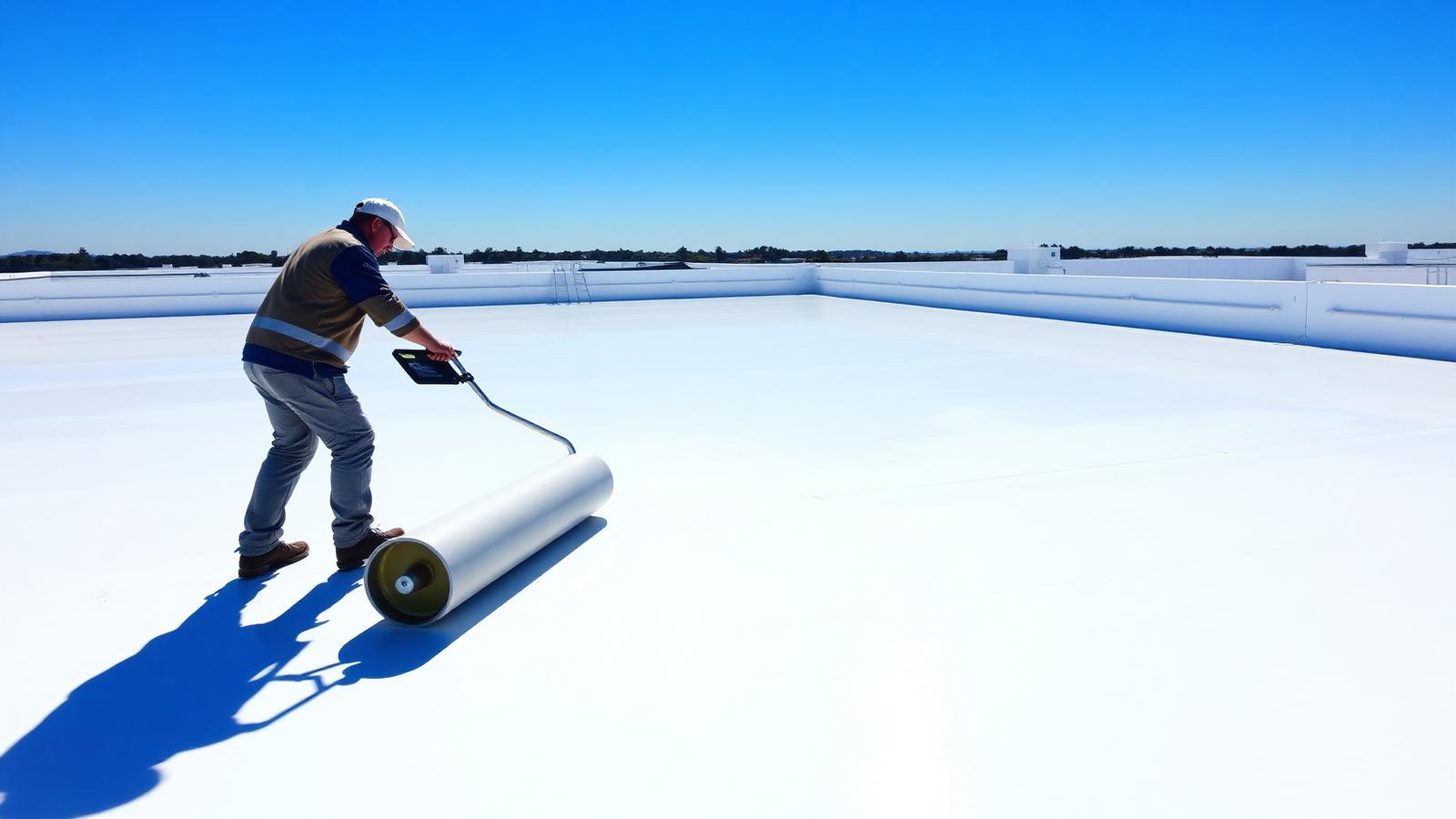
Spray polyurethane foam and silicone coating systems restore a roof by going over the existing assembly — no demolition, no dumpsters, no open roof. That single difference eliminates most of the disruption list:
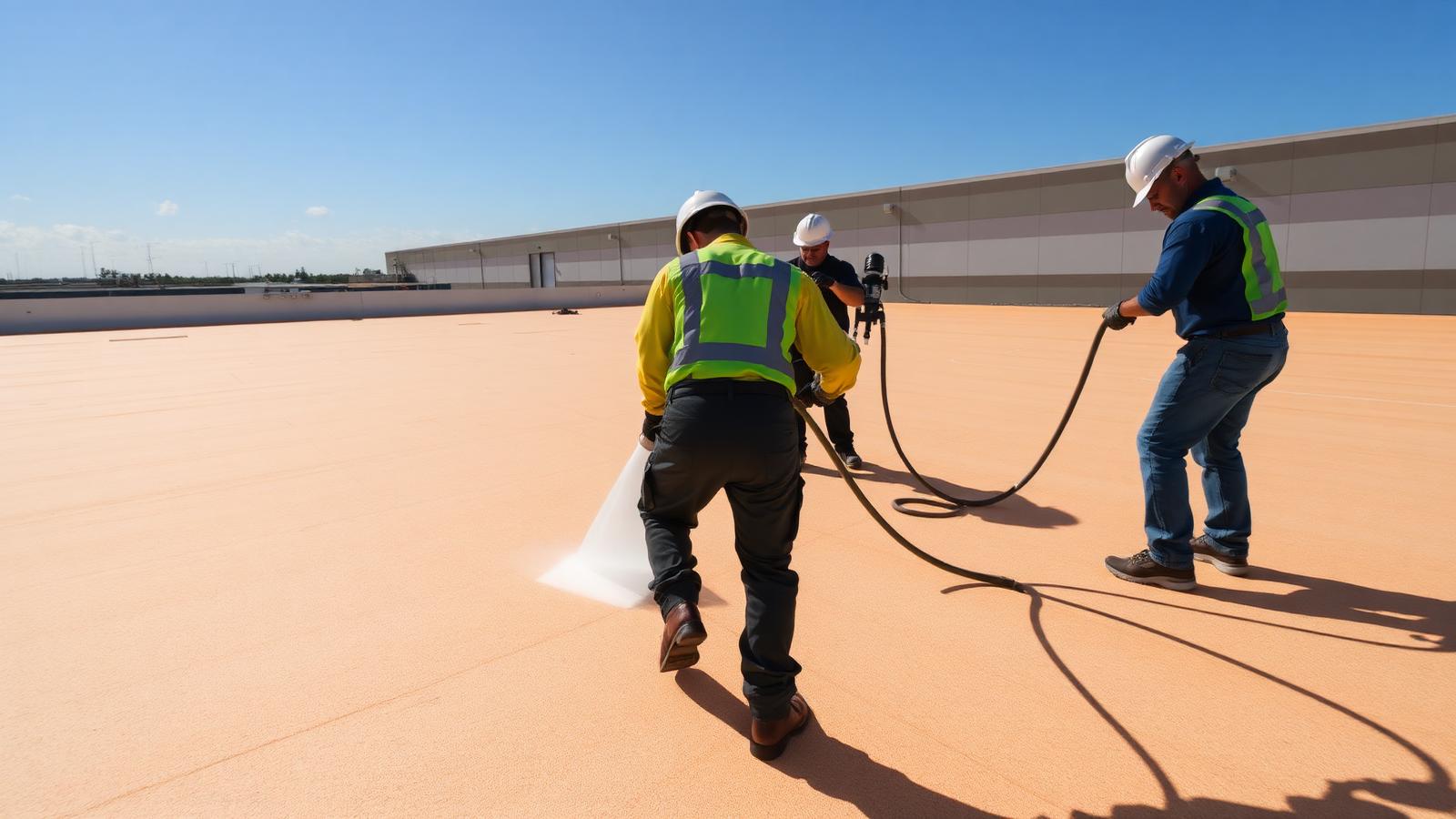
- No tear-off noise. SPF and silicone are spray- and roller-applied. There's no mechanical demolition above your tenants — the loudest equipment stays in the spray rig at ground level.
- Low odor. Modern silicone coatings come in low-VOC formulations that meet even California's strict requirements. We still coordinate around HVAC intakes as standard practice, but there's no asphalt kettle and no burning torch anywhere on your property.
- The building stays watertight the whole time. Because the existing roof stays in place, there's never an open section waiting for a 3 p.m. thunderstorm. Work can pause for weather and resume without exposure.
- Smaller footprint, faster schedule. No debris chutes, no crane days for tear-off loads, minimal staging. Our seven fully-rigged spray trucks carry the system to the roof; your parking lot mostly stays a parking lot.
- About one-third the cost of replacement. Which matters to your budget — and to the special assessment conversation if you manage a condo or HOA.
For occupied buildings, this is the core argument: restoration isn't just cheaper, it's quieter, cleaner, and dry the entire time.
The Honest Caveat: Not Every Roof Qualifies
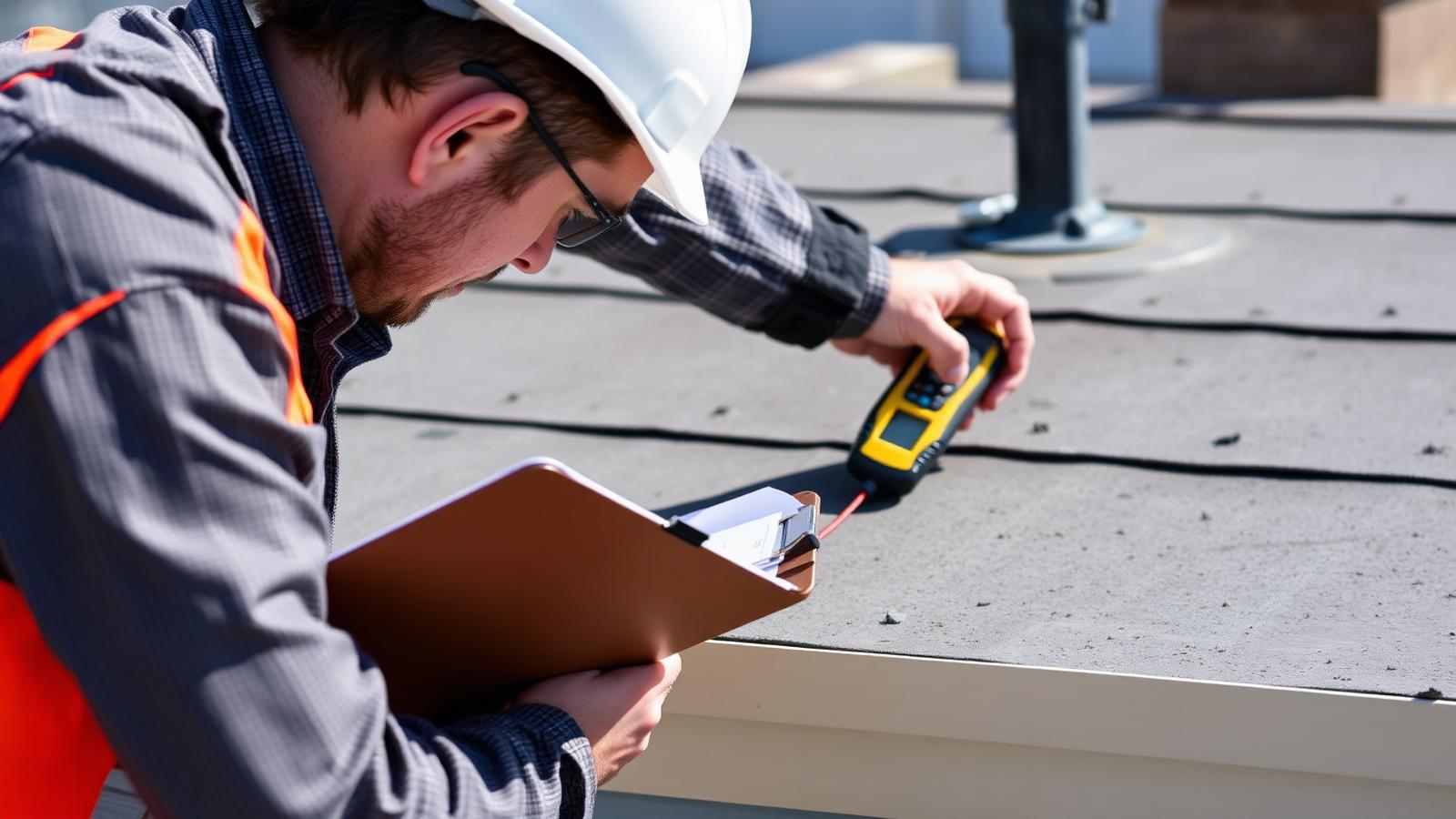
We disqualify roofs from restoration regularly, and you should be suspicious of any contractor who doesn't. Our standard is the Moisture Rule: if a moisture survey shows less than 15% of the roof assembly is wet, restoration is on the table. If more than 50% is saturated, coating over it just seals the problem in — that roof needs replacement, and we'll tell you so.
That survey is also your planning tool. Knowing where your roof actually stands lets you schedule the work on your calendar — before budget season, before hurricane season, before the anchor tenant's renewal — instead of reacting to a leak over someone's server room.
Running the Project Right (Whatever Method You Choose)
Method matters most, but execution still counts. The playbook we've refined over 30 years with the same core crew: written tenant notice with a real schedule before work starts; a single point of contact so tenants aren't calling your office; staging and access mapped with you in advance; work sequenced around your sensitive tenants — spraying over the daycare on Saturday, not Tuesday; and daily cleanup, because perception of a job site is 90% of tenant sentiment. After the project, our Crown Care maintenance program keeps the roof — and your capital plan — predictable.
FAQ
Do tenants need to relocate during a roof restoration? No. SPF and silicone restoration is performed from the rooftop with the building fully occupied and operating. We coordinate spray schedules and HVAC intake protection around your tenants' hours, but nobody moves out and business doesn't stop.
How long does restoration take compared to replacement? Restoration typically runs meaningfully faster because there's no demolition phase and no structural surprises hiding under a tear-off. Exact duration depends on square footage and roof condition — a moisture survey and assessment gives you a real schedule, not a guess.
What if my roof is too wet to restore? Then we'll tell you, with the moisture survey data to back it up. Under our Moisture Rule, roofs over 50% saturated need replacement, and we'd rather lose a coating job than seal water into your building. Between 15% and 50%, targeted wet-area removal can sometimes bring a roof back into restoration territory.
If you're weighing roof work on an occupied building anywhere in Broward, Miami-Dade, or Palm Beach County, start with facts instead of a sales pitch. ROOF KING has spent 30+ years restoring commercial roofs over working businesses — same core crew for more than 20 of those years. Request a free roof assessment, including a moisture evaluation and an honest restore-or-replace call, at 954-782-3002. Strength from above.
Sources
Related reading
Free assessment
Free Commercial Roof Assessment
Licensed & insured Florida commercial roofing. Spray foam and silicone restoration across South Florida — no pressure, no cost.