Commercial Insurance Rates Are Finally Falling in Florida. Your Roof Decides How Much You Save.
For the first time in nearly a decade, the commercial property insurance conversation in South Florida isn't about how much more you'll pay — it's about how much less. Marsh's Q1 2026 data shows commercial property rates down 10% quarter-over-quarter, with catastrophe-exposed properties — that's every building in Broward, Miami-Dade, and Palm Beach — seeing decreases of roughly 16%. Seventeen new carriers have entered the Florida market. Citizens has shed over a million policies since late 2023.
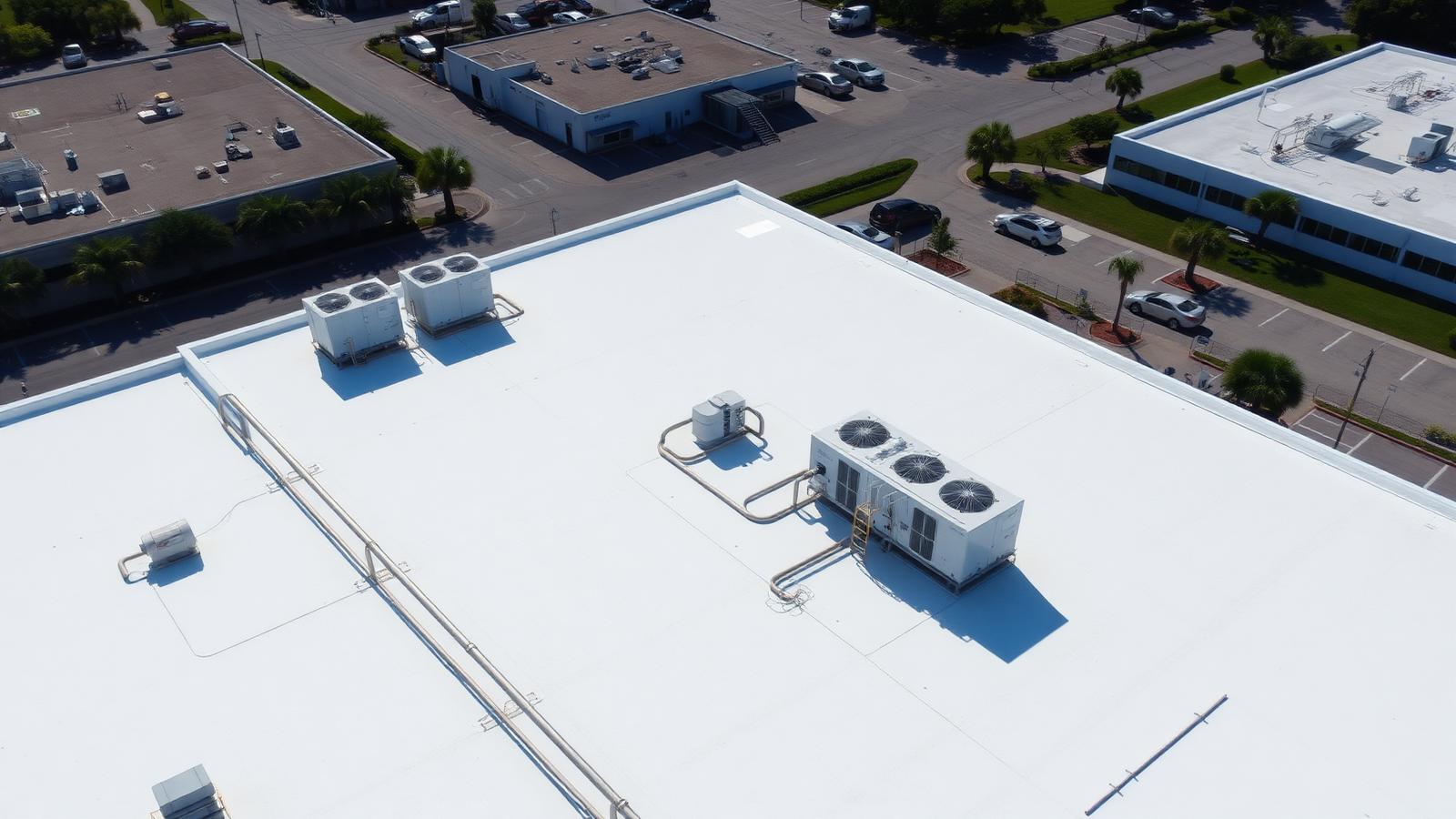
But here's what most property managers are about to learn the hard way: those decreases aren't handed out evenly. Underwriters are pulling aerial imagery of your roof before they quote. The buildings capturing 16% — and in some cases, per Howden U.S., second-round reductions of 30% or more — are the ones whose roofs pass that flyover. The buildings with visible ponding, patched seams, and a 22-year-old membrane are getting quoted like it's still 2023.
Insurance rates are falling for the first time in a decade — but the discount goes to the roofs that can prove they deserve it.
What the 2026 Softening Actually Looks Like
The numbers behind the shift are real and verifiable. Marsh reported global commercial property rates fell 10% in Q1 2026, accelerating from 8% the prior quarter. Non-catastrophe properties are down about 7% year-over-year, but catastrophe-exposed properties — South Florida commercial buildings squarely included — are down around 16%. Multifamily is seeing 5–15% decreases.
The drivers matter for how long this lasts: excess insurer capacity chasing too little demand, lower reinsurance treaty costs starting January 2026, and Florida's tort reforms finally flowing through to rates. On the residential-condo side, Citizens announced an average 8.7% statewide decrease taking effect at spring 2026 renewals, with Broward properties averaging 14.1% reductions and Miami-Dade 14.0%.
Soft markets don't last forever. One bad hurricane season and capacity tightens again. The window to lock in a favorable multi-year position on your property program is open right now — which is exactly why your roof documentation matters more this year than it has in a long time.
Underwriters Aren't Asking About Your Roof. They're Looking at It.
Here's the change that snuck up on most owners: underwriters no longer take your word for roof condition. Per Commercial Property Executive's 2026 underwriting survey of the market, carriers are evaluating roof age and condition through aerial imagery and drone inspections, scoring deferred maintenance, and weighing it alongside claims history and COPE factors before they release their best pricing.
That satellite pass doesn't know your roof's story. It sees dark ponding stains, blistered coating, rusted flashing, patchwork repairs in five different materials. What it can't see is the difference between a 25-year-old roof that's failing and a 25-year-old roof that was professionally restored 18 months ago and now carries a fresh 10- to 20-year warranty.
That's where documentation closes the gap. When your broker can put an engineer letter, a current inspection report, a manufacturer-backed coating warranty, and a maintenance contract in front of the underwriter, the aerial image stops being the last word. We've produced exactly that paper trail for South Florida buildings for 30+ years — inspections, certifications, and engineer letters are a core service line, not an afterthought.
Why a Restored Roof Reads Differently to a Carrier
A silicone-coated SPF or restored membrane roof changes the underwriting picture in three concrete ways.
First, it resets the effective condition of the surface. A seamless, fully-adhered silicone membrane eliminates the seams and fasteners where wind and water start their damage — the exact failure points carriers price for in a wind-borne debris region. Second, it comes with a transferable, insurable warranty, typically 10 to 20 years, that gives the underwriter a third party standing behind the roof. Third, restoration is documented by nature: moisture surveys, core samples, engineer sign-off. You hand your broker a file, not a promise.
And because restoration runs about one-third the cost of tear-off replacement, you can fund it out of a single year's operating budget — often out of a fraction of what you were overpaying on premium during the hard market. For condo boards, that same file feeds directly into your SIRS reserve conversation: a documented restoration extends the roof's useful life on paper, where it counts.
At 10 million+ square feet installed across South Florida, with the same core crew for 20+ years, we've watched this cycle before. The owners who win soft markets are the ones whose buildings are documented before renewal season, not after.
The Honest Part: Not Every Roof Should Be Restored
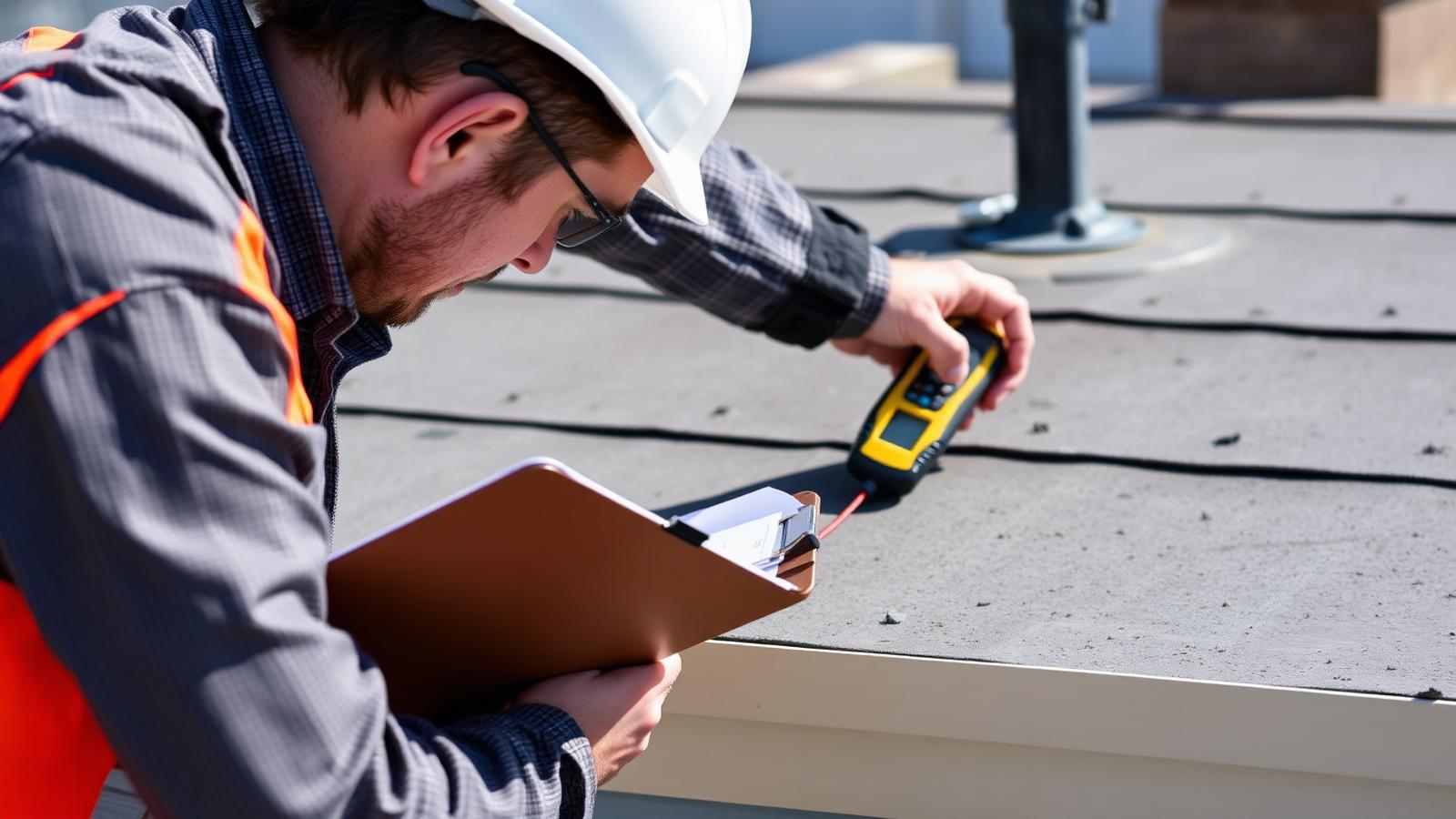
We disqualify roofs. Our Moisture Rule is simple: if a moisture survey shows less than 15% of the roof area is wet, restoration is on the table. Above 50% saturation, coating over the problem just traps it — that roof needs replacement, and we'll tell you so. In between, it's a section-by-section engineering call.
No underwriter is fooled by white silicone over a saturated deck, and neither are we. A restoration that fails inspection in year three costs you the premium credit and the warranty. The moisture survey comes first, every time.
What to Do Before Your Next Renewal
Start 90 to 120 days out. Get a professional roof inspection with a written condition report, and if the roof qualifies, get a certification or engineer letter your broker can submit with the application. If the roof needs work, price restoration now — a signed contract with a completion date ahead of renewal can be underwritten, and it beats walking into the meeting with drone photos of ponding water. Then keep the file alive: an ongoing maintenance program like our Crown Care plan gives you dated, documented proof of upkeep at every future renewal, not just this one.
This article is general information, not insurance or financial advice — confirm specifics with your licensed insurance broker or advisor.
FAQ
Will restoring my roof directly lower my insurance premium? No contractor can promise a specific credit — pricing is the carrier's call. What restoration does is remove the roof as an underwriting objection: it modernizes the surface, adds a warranty, and produces the inspection documentation carriers now require to release their best terms in a softening market.
My building is 30 years old. Can it still qualify for better rates? Age matters less than documented condition. Underwriters flag old, undocumented roofs. A 30-year-old building with a professionally restored roof, current engineer letter, and maintenance contract presents an entirely different risk file than the same building with none of that.
How do I find out if my roof qualifies for restoration instead of replacement? A moisture survey answers it in one visit. Under 15% wet area and restoration is typically viable at about a third of replacement cost; over 50% and we'll tell you plainly that it's a replacement — we don't coat saturated roofs.
The soft market is here, but it rewards the prepared. Schedule a free roof assessment with ROOF KING and get the condition report, moisture survey, and documentation your broker needs before your next renewal — call 954-782-3002. Strength from above.
Sources
Related reading
Free assessment
Free Commercial Roof Assessment
Licensed & insured Florida commercial roofing. Spray foam and silicone restoration across South Florida — no pressure, no cost.