Ponding Water Weighs 5.2 Pounds Per Inch, Per Square Foot. Here's What That's Doing to Your Flat Roof.
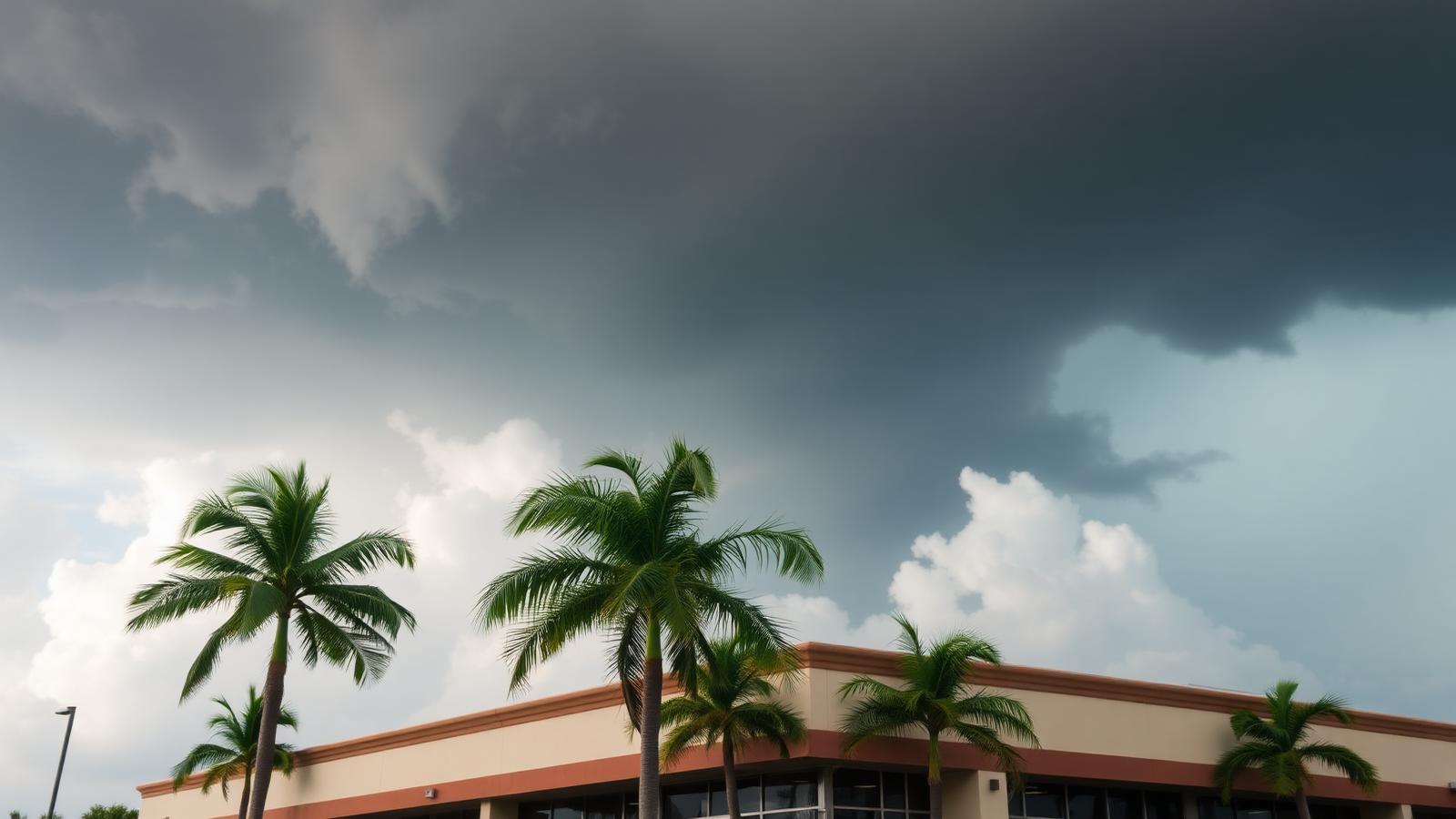
Walk any commercial flat roof in Broward County 48 hours after a summer downpour and you'll probably find them: shallow, murky ponds sitting where the roof should be dry. Most property managers treat them as a cosmetic nuisance. Engineers see something different — a live load parked on a structure, feeding a feedback loop that can quietly bend a roof deck out of shape.
That 48-hour mark isn't arbitrary. It's the industry-standard definition of ponding: water still standing two days after the rain stops. In South Florida's rainy season, where afternoon storms arrive on a near-daily schedule from June through October, a roof that ponds never really gets the chance to dry out. Here's the engineering behind why that matters — and why the fix is often simpler than a tear-off.
The Math Nobody Runs: What Water Actually Weighs
Water weighs 62.4 pounds per cubic foot. Spread across a roof, that works out to about 5.2 pounds per square foot for every inch of depth.
Run that number against a real pond and it stops sounding small. A 2-inch-deep pond covering a 2,000-square-foot low spot — common on an aging big-box or warehouse roof — is carrying roughly 20,800 pounds. That's over 10 tons of water, sitting on a deck that was likely designed decades ago with far thinner safety margins than you'd hope.
For scale: the April 2023 storm that flooded Fort Lauderdale dropped 25.91 inches of rain at Fort Lauderdale–Hollywood International Airport — the most ever recorded there in a single day, most of it within about 12 hours. No roof drain system is sized for a 1-in-1,000-year event. But that storm exposed a truth about ordinary storms too: any roof that can't shed water quickly is banking weight it was never meant to hold.
Ponding water isn't a stain on your roof. It's a live load your structure was never designed to carry indefinitely.
The Feedback Loop: Why Ponds Get Worse, Never Better
Structural engineers have a name for the mechanism that makes ponding dangerous: ponding instability. ASCE/SEI 7 — the load standard referenced by the Florida Building Code — describes it plainly: water accumulates, the added weight deflects the roof structure downward, the deflection deepens the bowl, and the deeper bowl collects more water. Repeat.
The 2022 edition of ASCE 7 tightened its rain-load chapter specifically because of this, requiring designs to explicitly account for ponding head and secondary (overflow) drainage. That's the code catching up to what roofers in South Florida have watched happen for decades.
Here's the part most building owners don't know. The code-minimum slope for new low-slope roofs is 1/4 inch per foot — and per the building-envelope engineers at IIBEC, that minimum was never intended to compensate for structural deflection. Common deflection limits used in design (L/120, L/180) carry an explicit code footnote warning that they "do not ensure against ponding." Translation: a roof can be built exactly to code and still pond, because the framing sags under its own dead load plus water before the slope can do its job. Many buildings we restore in Pompano Beach, Fort Lauderdale, and Miami were built in the 1970s–90s under older codes with even less margin.
Once a bay starts bowing, gravity does the rest. Ponds don't stabilize. They migrate, merge, and deepen.
What Standing Water Does While It Sits There
Even before structural concerns, ponding attacks the membrane itself:
- It magnifies UV. A shallow pond acts like a lens, concentrating South Florida's brutal sun on the membrane below while the dissolved dirt keeps the surface wet and warm. Asphaltic and modified-bitumen surfaces oxidize and craze faster under ponds.
- It finds every seam. Water sitting on a lap seam for weeks probes it in a way a passing storm never can. Most flat-roof leaks we trace on inspections start under or beside a chronic pond.
- It grows things. Algae, then vegetation, then root systems working into the membrane. We've pulled ferns off Broward County warehouse roofs.
- It voids coverage. Many membrane manufacturers exclude ponding-related damage from their warranties, and insurers increasingly photograph roofs from the air. A roof full of ponds is a roof full of documented pre-existing conditions.
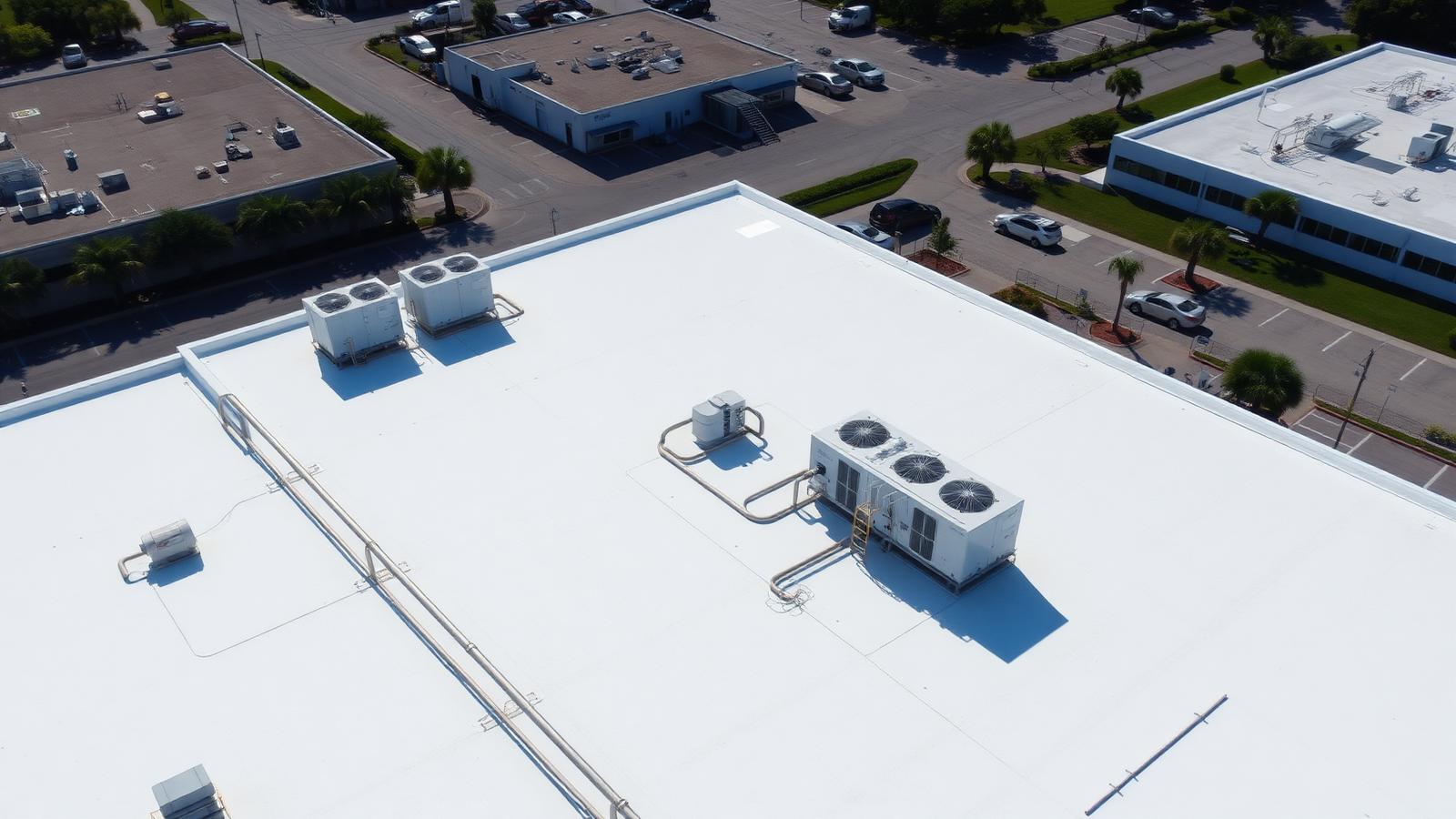
The SPF Advantage: The Only Roof That Builds Its Own Slope
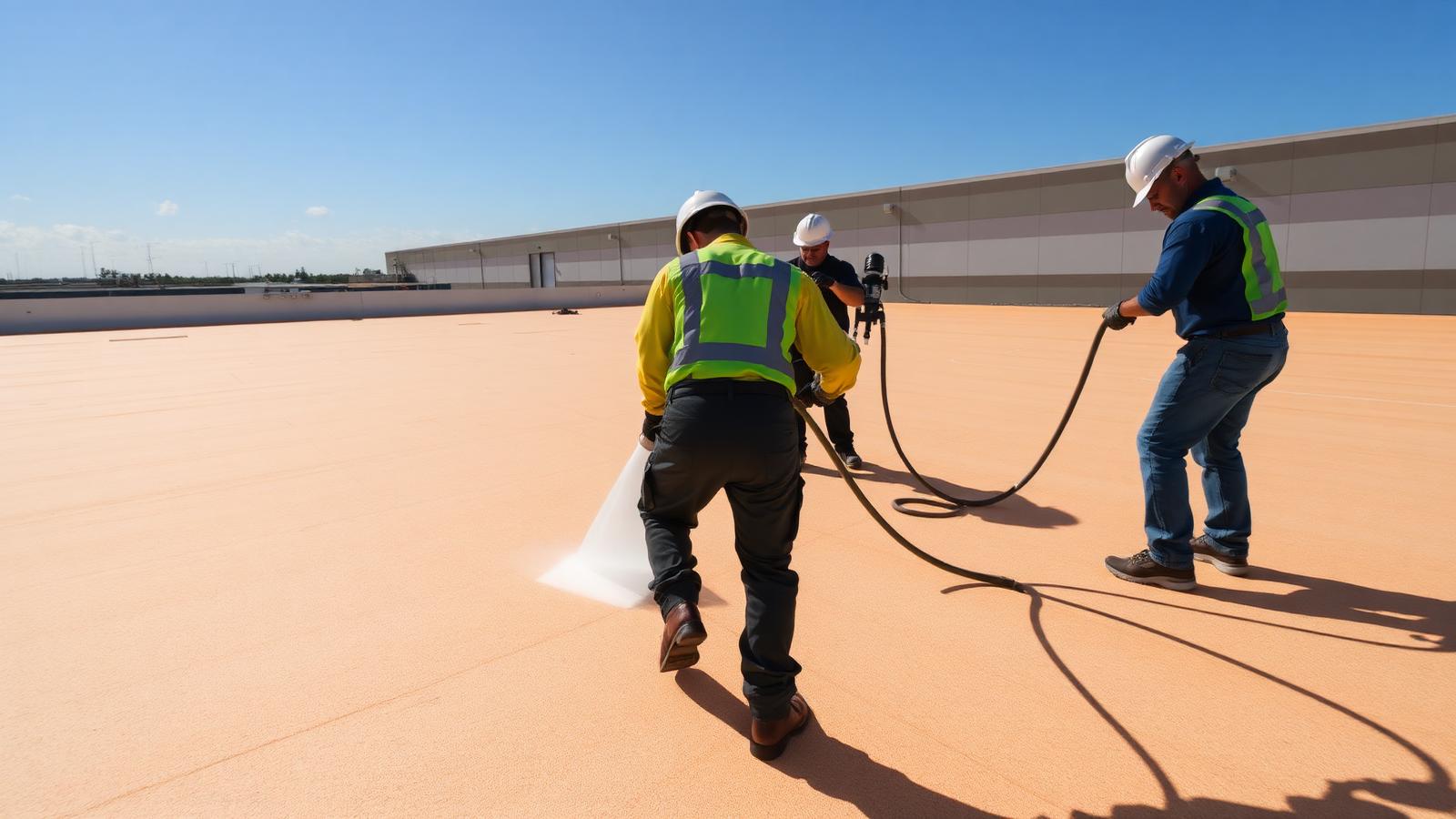
Here's where the physics turns in your favor. Spray polyurethane foam is applied as a liquid that expands roughly 30x and cures in seconds — which means thickness is a variable we control at the spray gun, foot by foot.
That makes SPF the only major roofing system that can correct slope during installation. Our crews — the same core team for 20-plus years — read a roof's drainage the way a river guide reads water. Low spot in the middle of a bay? We build it up. Dead zone between two drains? We spray a foam cricket to split the flow. Deck that's deflected a half-inch over 40 years? We feather the foam to restore positive drainage to the drains and scuppers, without adding meaningful weight: SPF runs about 0.3 pounds per square foot per inch of thickness — versus 5.2 for the water it displaces.
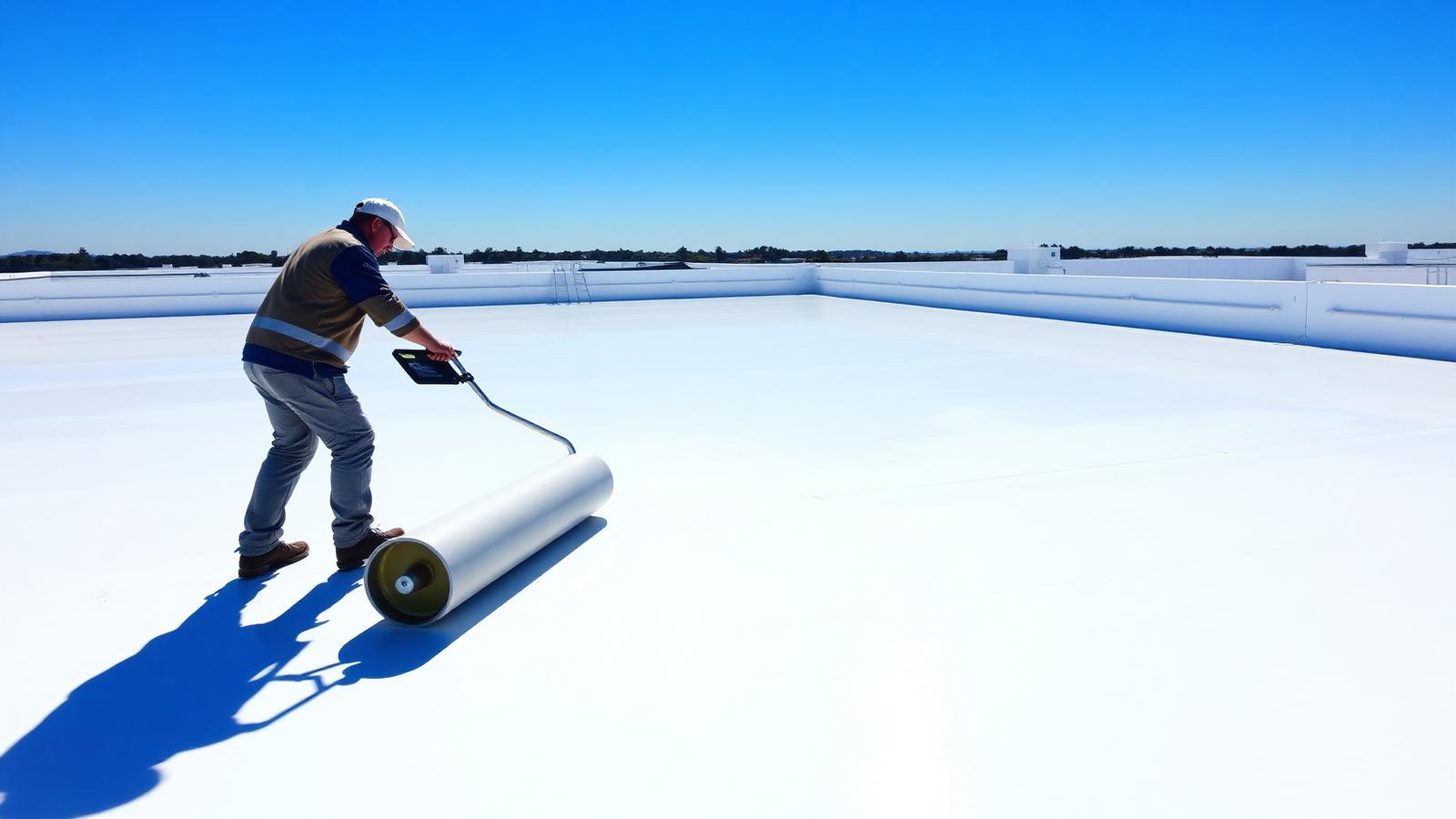
Then the silicone topcoat closes the deal. Unlike acrylic coatings, silicone is moisture-cure chemistry — it doesn't soften, re-emulsify, or degrade under standing water, which is why it's the coating class rated for incidental ponding. On the rare low spot that still holds a skim of water after a storm, silicone simply doesn't care.
One honest caveat, because we'd rather disqualify a roof than restore the wrong one: chronic ponding often means water has already gotten in. That's why every ROOF KING assessment starts with a moisture survey and our Moisture Rule — under 15% saturation, we restore; over 50%, we tell you to replace, even though replacement isn't what we sell. After 30-plus years and 10 million square feet installed across South Florida, that rule is why our restored roofs perform.
What a Property Manager Should Do This Week
You don't need an engineer to start. Walk the roof (or fly a drone) two days after the next storm and photograph every pond. Check that primary drains and overflow scuppers are clear — a clogged drain is the cheapest ponding fix in existence, and August, mid-rainy-season, is exactly when debris loads peak. Mark any pond wider than a parking space or deeper than an inch, and note whether the same spots recur. Then get a professional moisture scan before budgeting season locks your numbers.
If ponds keep coming back in the same places, the roof is telling you its slope is gone. Restoring that slope with SPF and sealing it under silicone typically runs about one-third the cost of a tear-off and replacement — with no rip-off debris, no exposed deck during storm season, and no disruption to the tenants underneath.
FAQ
How much ponding is "acceptable" on a commercial flat roof? The working standard: water that drains or evaporates within 48 hours of rainfall is normal; water still standing after 48 hours is ponding and worth investigating. Depth matters too — anything approaching an inch that recurs in the same spot indicates a slope or drainage problem, not just a bad storm.
Can ponding water actually collapse a roof? It's rare but documented, and it's why ASCE 7 devotes an entire chapter to rain loads and ponding instability. The realistic risk for most South Florida buildings isn't sudden collapse — it's progressive deflection that accelerates leaks, shortens membrane life, and grows the eventual repair bill every year it's ignored.
Will a silicone coating alone fix my ponding problem? Silicone protects the membrane under ponds; it doesn't remove the ponds. If the roof has lost slope, coating over it seals the surface but leaves the structural load and drainage problem in place. The right sequence is moisture survey first, slope correction with SPF where needed, then the silicone system over the top.
Your roof is telling you where it's weak — every pond is a marked spot. ROOF KING has restored commercial roofs across Broward, Miami-Dade, and Palm Beach for over 30 years, with 10 million-plus square feet installed and 7 fully rigged spray trucks based in Pompano Beach. Get a free roof assessment, including a moisture survey and drainage evaluation, before the ponds decide your budget for you: call 954-782-3002. Strength from above.
Sources
Related reading
Free assessment
Free Commercial Roof Assessment
Licensed & insured Florida commercial roofing. Spray foam and silicone restoration across South Florida — no pressure, no cost.