The Bond the Sun Can't Break: Why Silicone Outlasts Everything Else on a South Florida Roof
Miami's UV index hits "very high" or "extreme" ten months out of the year and peaks around 13 in June. Every one of those days, your roof absorbs a barrage of ultraviolet photons that are, quite literally, strong enough to snap the molecular backbone of most roofing materials. Acrylic coatings chalk and thin. Asphalt dries out and alligators. Single-ply membranes get brittle at the seams.
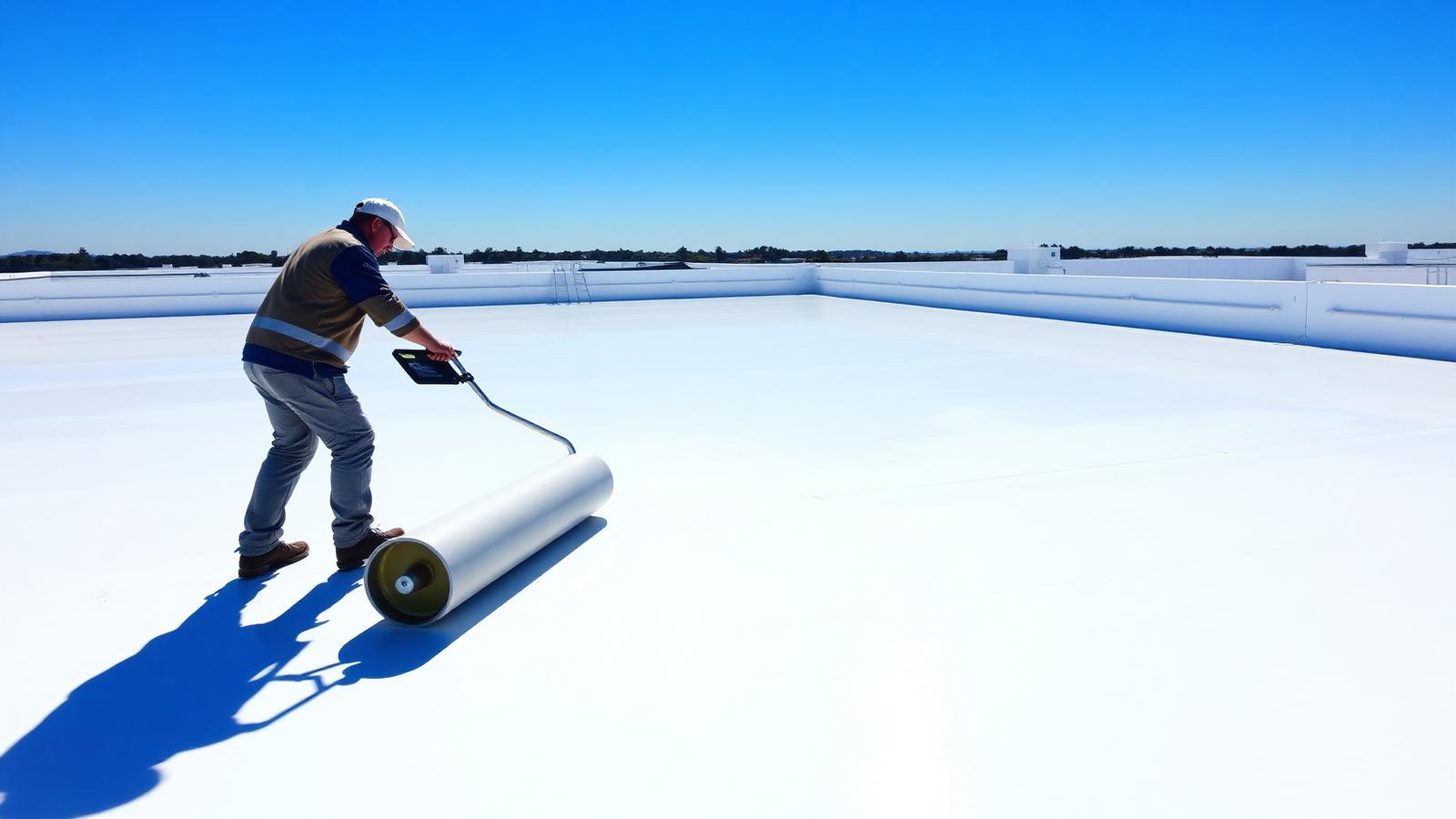
Silicone doesn't. And the reason isn't marketing — it's bond energy. Here's the chemistry, in plain English, of why we top every spray foam roof we install with silicone, and why that combination keeps performing on South Florida roofs decades after other systems have been torn off.
Sunlight Is a Demolition Crew With a Specific Crowbar
UV light does damage because each photon carries a fixed amount of energy, and if that energy exceeds the strength of a chemical bond, the photon can break it. Shortwave UV around 300 nanometers — the aggressive end of what reaches a rooftop — carries roughly 398 kJ/mol of energy.
Now look at what most roofing materials are made of. Asphalt, acrylic, TPO, EPDM — all of them are organic polymers built on carbon-carbon bonds, which hold together with about 348 kJ/mol. The math is brutal: the sun's crowbar is stronger than the material's frame. Photon by photon, day after day, UV cleaves those carbon chains. That's what chalking is — the surface of an acrylic coating literally coming apart into powder. That's why mod-bit granules shed and why old membranes crack when you flex them.
In Broward, Miami-Dade, and Palm Beach counties, that demolition crew works nearly year-round. There's no winter break for your roof down here.
The Si-O Backbone: Built Above the Sun's Pay Grade
Silicone is different at the molecular level. Instead of a carbon-carbon backbone, silicone polymers are built on a repeating silicon-oxygen chain — the siloxane bond. That Si-O bond holds together at roughly 444 kJ/mol.
Run the same math: a 398 kJ/mol photon hits a 444 kJ/mol bond and bounces off. The backbone stays intact.
The Florida sun is strong enough to break the backbone of almost every roofing material — except the one built on a bond stronger than sunlight.
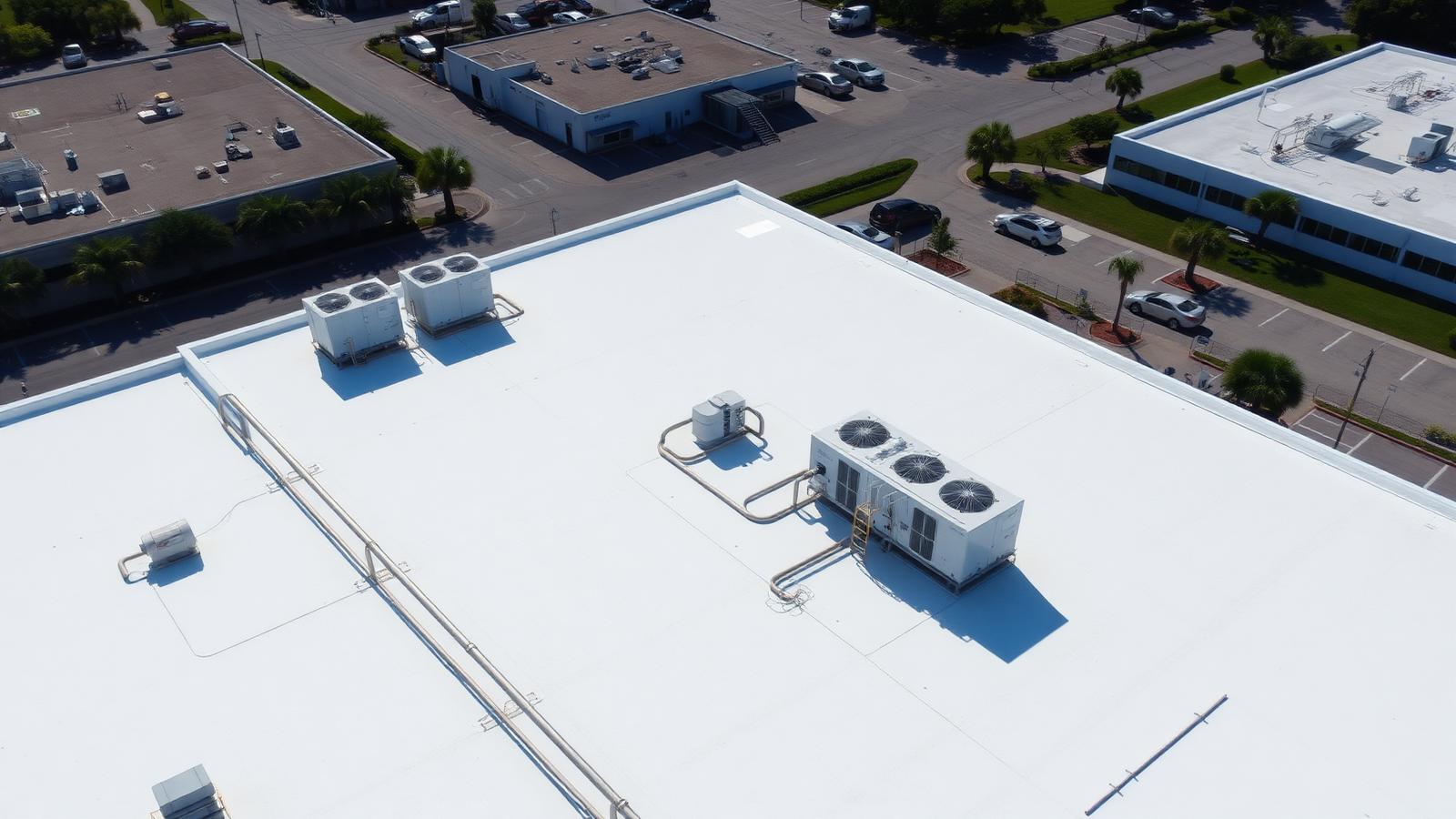
That's the whole story of why silicone doesn't chalk away, embrittle, or lose thickness the way organic coatings do. It's not a better additive package or a thicker application hiding the same weakness. The base chemistry is simply above the energy level of the attack. Independent weathering studies note that silicones in coastal and desert exposure — the harshest UV environments on Earth — show only minor changes in mechanical properties after accelerated aging. On top of that, a white silicone surface reflects the great majority of solar energy in the first place (quality coatings start around 0.87-0.88 reflectance), so most of the assault never even lands.
South Florida Humidity Is Actually the Cure
Here's a detail most people find backwards: silicone roof coatings cure by pulling moisture out of the air. Atmospheric humidity drives the crosslinking reaction that turns the liquid coating into a seamless rubber membrane — typically within 2 to 8 hours depending on conditions.
In Arizona, that's a limitation. In Pompano Beach, it's a feature. Our year-round humidity is ideal cure weather, and a surprise afternoon shower that would wash a freshly applied acrylic coating right off the roof is far less of a threat to moisture-cure silicone. For property managers scheduling work in rainy season, that difference shows up as fewer weather delays and fewer do-overs.
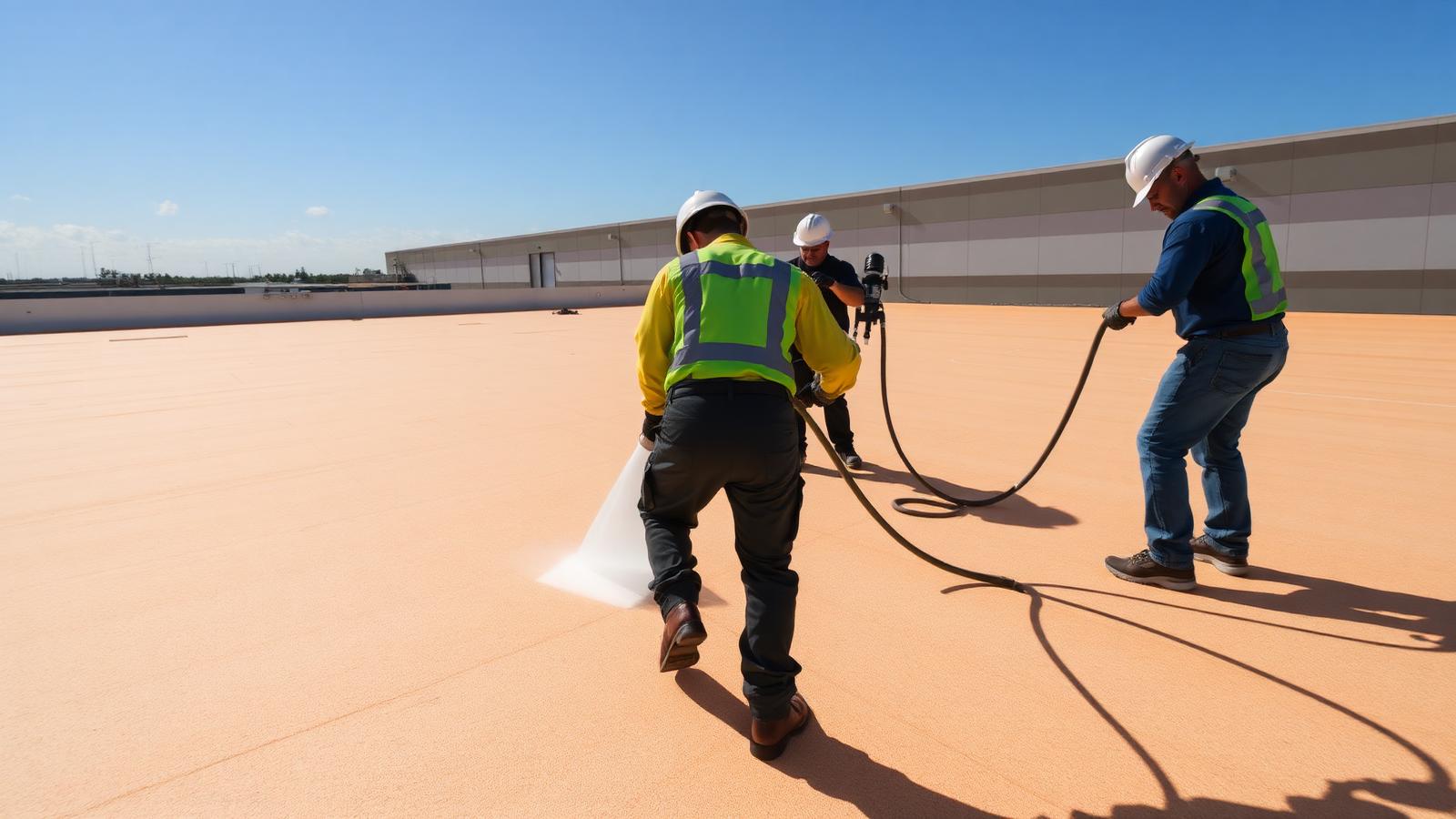
Modern high-solids silicones also run 95%+ volume solids — meaning what we spray is almost entirely coating, not solvent that evaporates away. Applied at a target of 20-30 dry mils, that film thickness is what manufacturers back with 10-, 15-, and 20-year warranties.
Ponding Water: Where the Chemistry Gets Tested
Flat roofs in South Florida pond. Summer drops 8-plus inches of rain in a month, drains clog with debris, and decks deflect over time. Ponding is exactly where acrylic coatings fail — they're water-based chemistry, and sitting water slowly re-softens and degrades the film. Most acrylic warranties exclude ponding areas outright.
Silicone is hydrophobic — it repels water at the molecular level — and its cured film stays dimensionally stable even submerged. The industry standard for silicone roof coatings, ASTM D6694, exists in part because silicone is the coating category that can make that claim. On a sprayed polyurethane foam roof, we also slope the foam itself to eliminate most ponding before the coating ever goes on. Chemistry plus geometry: that's the system.
What This Means for Your Building
The SPF-plus-silicone system pairs closed-cell foam (insulation, slope, and wind-uplift strength) with a topcoat whose chemistry is matched to the specific ways South Florida kills roofs: UV, heat, humidity, and standing water. It goes on over your existing roof — no tear-off, no dumpsters, no tenants working under open deck — at roughly a third of replacement cost.
We've been installing this system for over 30 years, with the same core crew for more than 20 of them, across 10+ million square feet of South Florida rooftops. And we'll tell you honestly when it's not the right call: under our Moisture Rule, if a scan shows less than 15% of your roof is wet, restoration makes sense; over 50%, and we'll tell you to replace, because coating trapped moisture is wasted money. Strength from above — but honesty first.
FAQ
How long does a silicone-coated SPF roof last in South Florida? The foam itself is essentially permanent when protected. The silicone topcoat carries 10-20 year warranties depending on thickness, and at the end of that term the roof is typically cleaned and recoated — no tear-off — restarting the warranty clock.
Does silicone work over my existing TPO, metal, or modified bitumen roof? Usually, yes — silicone adheres well to most commercial substrates after proper cleaning and priming. The deciding factor is moisture in the existing assembly, which is why every project starts with a moisture scan and a free assessment.
Is silicone slippery when wet? Cured silicone can be slick underfoot in rain, which matters on roofs with regular foot traffic. Walk-pad areas with embedded granules solve this, and we design them into any roof with HVAC service paths.
Get the Chemistry Working for You
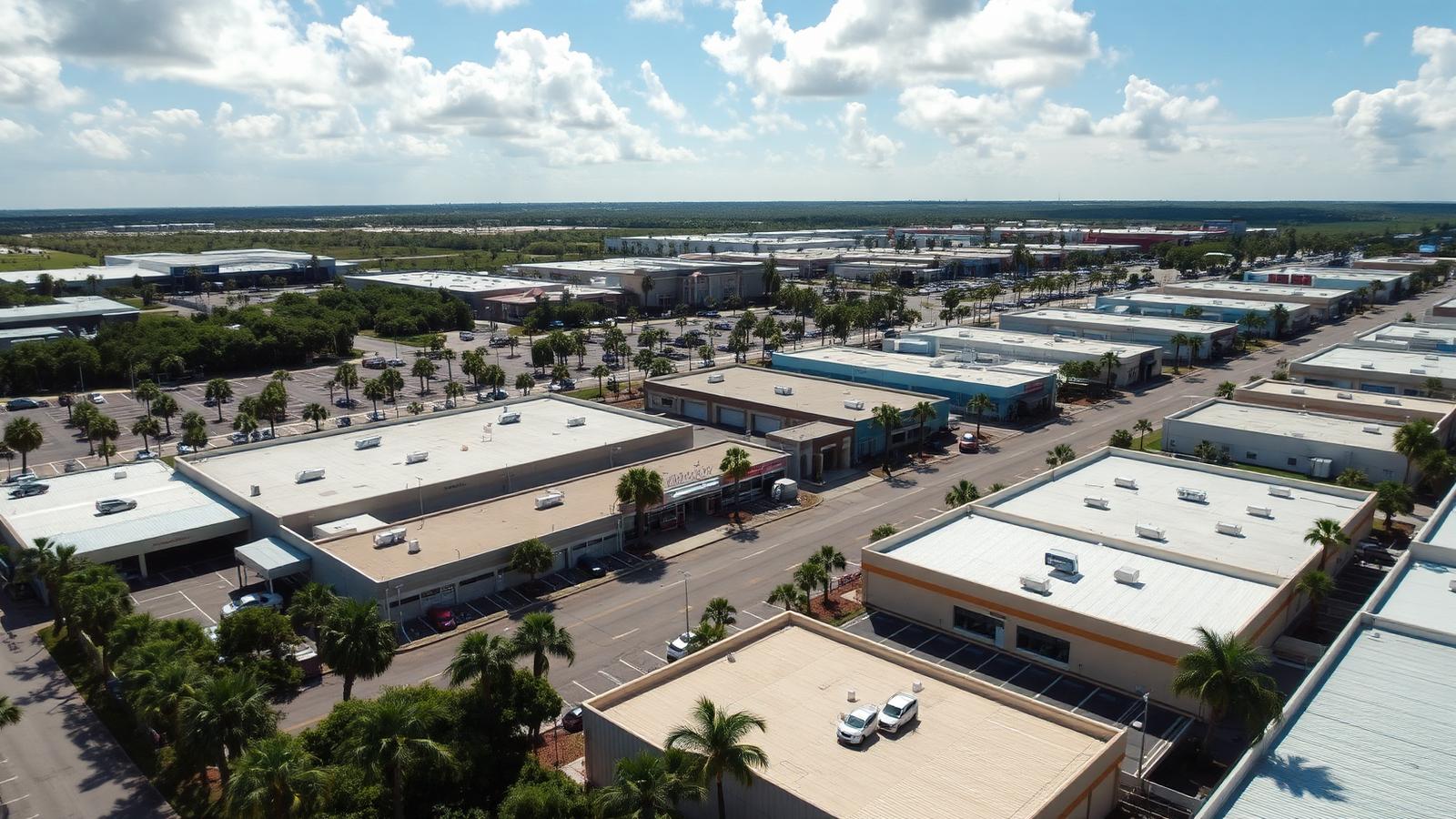
If your roof is chalking, cracking, or ponding, the sun is winning a fight your current material was never equipped to survive. A free ROOF KING assessment — including a moisture evaluation under our Moisture Rule — will tell you exactly where your roof stands and whether restoration can save you from a tear-off. Call 954-782-3002 or request your free roof assessment today.
Sources
Related reading
Free assessment
Free Commercial Roof Assessment
Licensed & insured Florida commercial roofing. Spray foam and silicone restoration across South Florida — no pressure, no cost.